Cybersecurity training fails

Why Phishing Training Fails to Stop Modern Attacks

A new study from UC San Diego Health should make every security leader stop and think. Researchers ran nearly 20,000 employees through ten simulated phishing campaigns over eight months. The result? Training made almost no difference. Employees who had recently completed mandatory cyber awareness courses failed phishing tests at virtually the same rate as those who hadn’t. The average gap was a sickly 1.7% improvement — effectively zero.

Kevin Surace
3 minute read

Microsoft ADFS Redirect Exploit Proves Legacy MFA Is Broken

Last week, BleepingComputer reported on a clever new phishing campaign targeting Microsoft users. Instead of pixel-perfect fake sites or smishing lures, attackers are now abusing legitimate Microsoft ADFS redirect endpoints to steal logins.

Kevin Surace
3 minute read
Pixel-Perfect Phishing

Pixel-Perfect Phishing: How Unicode Attacks Bypass MFA

How “ん” And Clever Domain Spoofing Are Bypassing Legacy MFA — And Why Only Token Shuts The Door In the evolving phishing landscape, attackers don’t need high-level exploits—they only need one cunning trick: swap in a lookalike character that fools the human eye. As detailed recently in BleepingComputer, Booking.com users recently fell victim to one such campaign that leveraged the Japanese Hiragana “ん” (Unicode U+3093) to masquerade as a familiar URL path. It’s no text-only illusion; this is phishing with precision.

Kevin Surace
3 minute read

Ransomware Is Up 179% in 2025. Legacy MFA Is Why.

CSO Online just dropped a staggering stat: ransomware attacks have jumped 179% in the first half of 2025. Credential theft? Up 800%. That’s not a typo. Eight. Hundred. Percent.

Kevin Surace
1 minute read
CISA dropped a bombshell

CISA's Urgent Warning on Phishing-Resistant MFA and FIDO2

CISA just dropped a bombshell. In its latest alert (dated July 25, 2025), the U.S. Cybersecurity and Infrastructure Security Agency is now urging every enterprise to implement phishing-resistant multifactor authentication (MFA)—everywhere: for email, VPNs, and anything touching critical systems. Not “consider it.” Not “evaluate in the future.” Require it. Now.

Kevin Surace
1 minute read
Social Engineering Hacks Keep Winning

How to Prevent Social Engineering Attacks

Another day. Another preventable breach. This time it’s a major UK based insurance company, Allianz Life, and the attackers didn’t need zero-day exploits or complex malware. They just talked their way in.

Kevin Surace
1 minute read

The Clorox Lawsuit: 380M Over a Password

Kevin Surace
1 minute read
Identity-Based Attacks

The Rise of Identity-Based Attacks

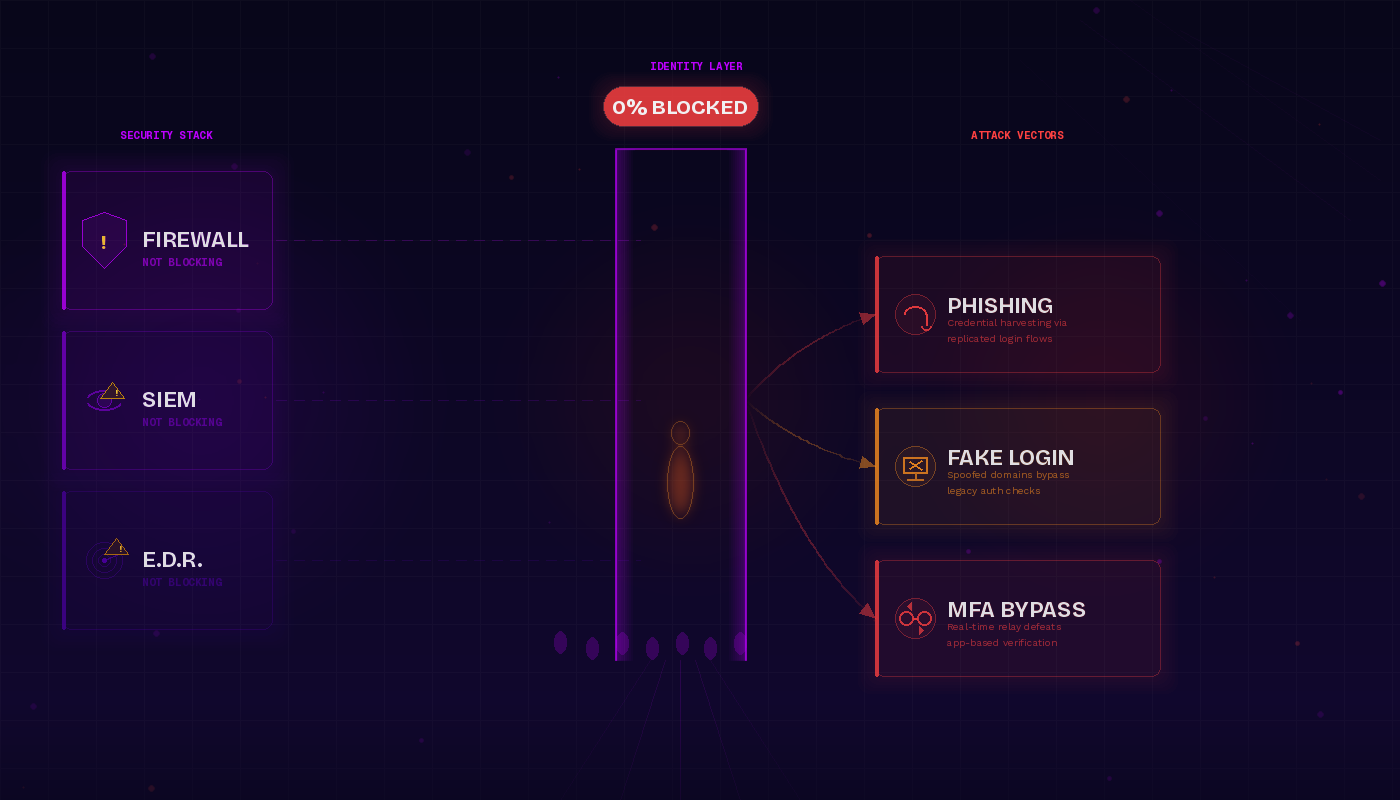
BetaNews recently asked this question in a detailed Q&A. The answers should concern every enterprise leader. The rise of identity-based attacks isn’t just a trend; it’s now the primary way cybercriminals get in. Attackers are no longer brute-forcing firewalls or cracking encryption. They’re simply logging in as you.

Kevin Surace
1 minute read

Phishing-Proof MFA That Stops Social Engineering

Microsoft’s recent advisory on Octo Tempest should make every CISO lose sleep. This group isn’t just hacking software vulnerabilities. They’re hacking people, impersonating employees, tricking help desks into resetting passwords, stealing session cookies, and bypassing legacy MFA with social engineering.

Kevin Surace
1 minute read

AI-Generated Phishing Attacks Are Making Legacy MFA Obsolete

Generative AI just made phishing so easy that anyone can do it—and do it convincingly. According to Axios, researchers demonstrated that in just 30 seconds, a simple natural-language prompt was all it took to build a pixel-perfect spoofed login site. No coding. No technical skills. Just type “build a copy of the website login.okta.com,” and a convincing clone appears, ready to trick anyone into handing over credentials.

Kevin Surace
2 minute read
Stolen credentials are the new front door

Stolen Credentials Are the New Front Door

The cybersecurity world has a new consensus: credentials are no longer a weak point—they’re the entire attack surface.

Kevin Surace
2 minute read
Scattered Spider is targeting Fortune 500 firms

Scattered Spider Hackers Are Hunting the Fortune 500

A new report from CyberCube just confirmed what many of us in cybersecurity have long suspected: Scattered Spider is targeting hundreds of major enterprises with precision. Nearly 300 companies—each with over $500 million in annual revenue—have been flagged as high-risk. Why? Because they’re still running the same legacy technologies this threat group exploits with shocking ease.

Kevin Surace
1 minute read

Stay Identity Assured

Subscribe to The Assured Identity Brief for sharp insights on identity security, authentication, and the threats security leaders must stay ahead of.