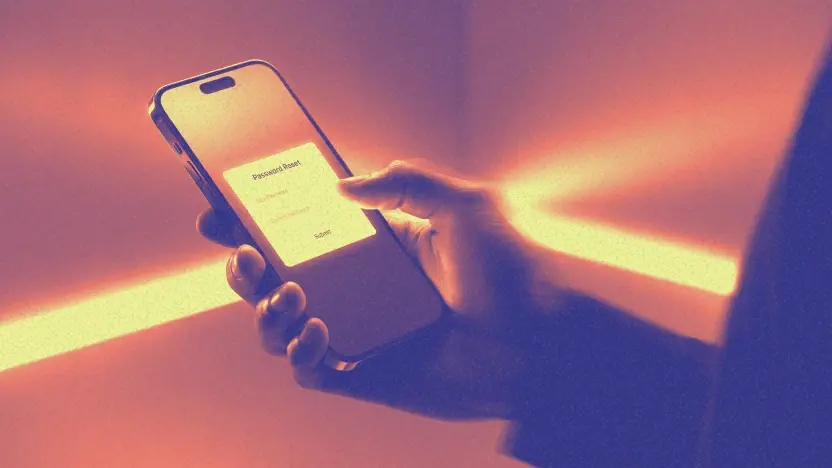
A newly published academic paper introduces a new hacker tool called PixSnapping (download PDF), an advanced attack that can steal screen pixels from Android devices and reconstruct sensitive data like 2FA codes in real time. The research demonstrates that an attacker-controlled app can capture or infer the digits displayed by authenticator apps such as Google Authenticator in under thirty seconds.
PixSnapping works by exploiting weaknesses in the Android rendering pipeline. A malicious app can overlay semi-transparent activity layers that force other apps to render their visual content in predictable patterns. By measuring timing and compression side channels from GPU rendering buffers, the malware reconstructs the exact pixel values displayed on the screen. From there, it can recover the six-digit 2FA codes or other sensitive visual data and send them to an attacker instantly.
The researchers confirmed end-to-end recovery of authenticator codes on multiple Android devices, including Google Pixel and Samsung models. The attack does not require root access, special permissions, or user interaction beyond installing a malicious app. Once installed, the malware silently observes and extracts authentication data as it appears on screen.
This discovery exposes another devastating truth about software-based 2FA. When both factors—the password and the one-time code—reside on the same device, a single local compromise can defeat them both. Even if users are careful not to click phishing links, a background app with the right exploit can simply capture the pixels containing their codes. Patches and mitigations will help, but the vulnerability is architectural: screen-rendered secrets can always be observed by software running on that device.
Why Token’s Biometric Wireless FIDO2 Authentication Defeats PixSnapping Entirely
Token’s biometric authentication devices—Token Ring and Token BioStick—eliminate this attack surface completely. They never render any credential or code to any screen, so there are no pixels for malware to capture. Here’s why the attack simply fails when Token is in use:
- No Shared Secrets to Steal
Token devices store cryptographic private keys inside a secure element. The key never leaves the hardware and is never visible to any app or operating system process.
- Biometric Verification Required
Each authentication requires a live fingerprint match on the Token device itself. Even if a phone were infected with PixSnapping malware, it cannot trigger authentication or access the cryptographic key.
- Origin Binding
Token verifies that each authentication request matches the exact registered domain. Even if an attacker tried to relay or spoof a request, the signature would fail instantly.
- Proximity Enforcement
Wireless Tokens only authenticate when physically near the authorized computer or phone. Remote malware cannot coerce them to respond.
Because Token authentication never displays codes, never exposes private keys, and never trusts the host device’s rendering system, PixSnapping cannot extract or replay anything.
PixSnapping proves again hat legacy 2FA and auth apps are fundamentally unsafe. Now across several easy exploits. The only true protection is to move authentication out of the device and into biometric, hardware-based FIDO2 authenticators like Token Ring and Token BioStick. When credentials never appear as pixels, they can’t be snapped.