Agentic-AI Security
Protect the Enterprise
from its Own Agents
Add Biometric Authentication to AI Agents for Identity Assurance
Let agents add value, not unnecessary risk. Require human authentication when it matters most. AI agents no longer just answer questions: They send money, delete data, change access, and push to production. Token puts a biometric hard gate around the actions that carry consequence, because these decisions should have human proof. Logging in proves a human arrived. Token proves the right human is behind the action itself.
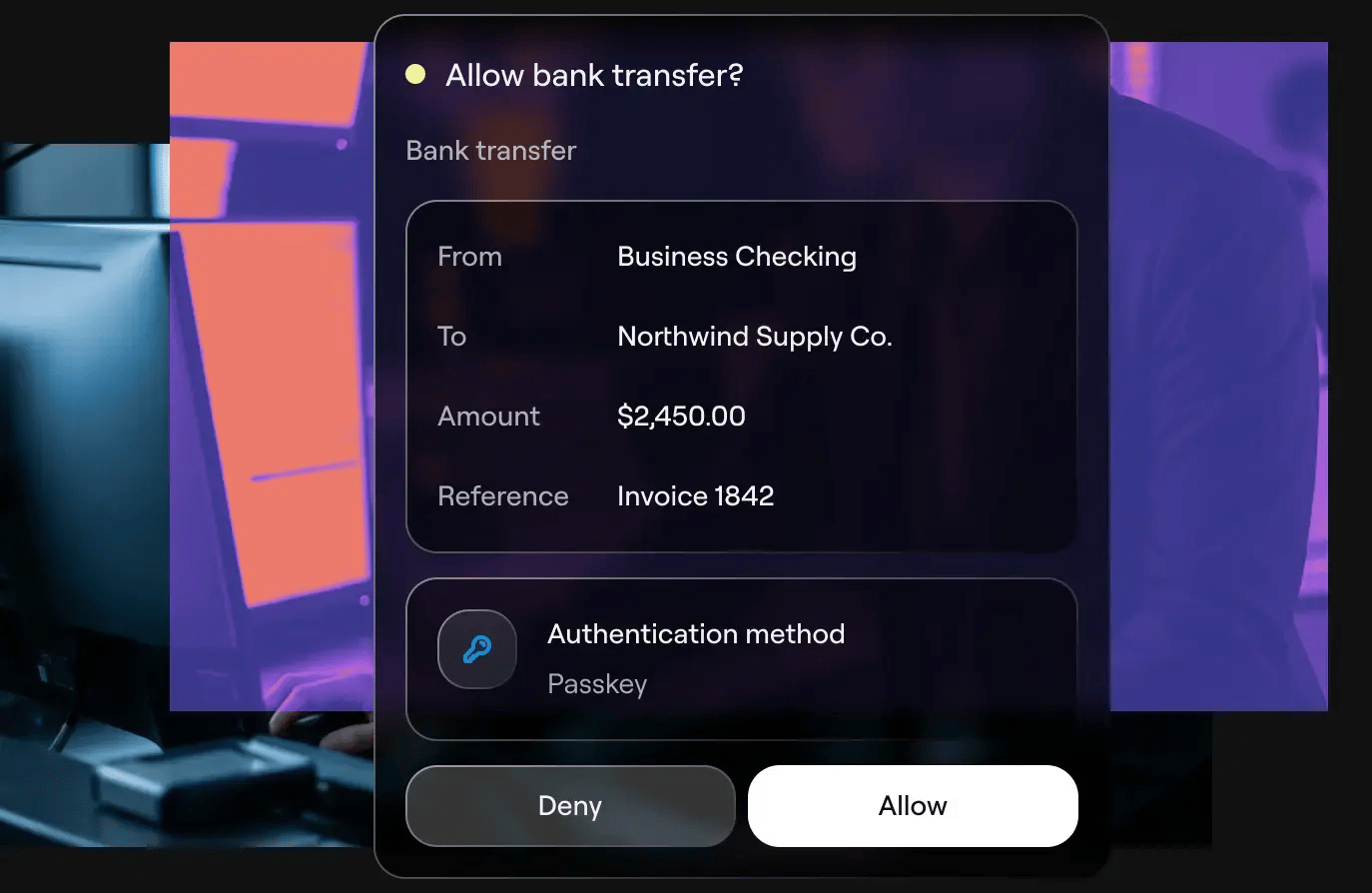
FIDO2 / WebAuthn certified
Biometric match-on-device
Outside the agent's reasoning environment
Drops into existing agentic workflows
The shift
A bad answer is a quality problem.
Moving money is a control problem.
Agents are wired into systems of record, finance platforms, cloud consoles, and code repositories. The moment an agent can act without governance, risk changes. A bad answer can be corrected. A wired transfer, a deleted record, or granted privilege cannot. The question is no longer how well the agent reasons. It is who approved the action.
.webp?width=1500&height=843&name=Hijacked%20(1).webp)
The hijacked agent
An agent manipulated by a bad actor through prompt injection, poisoned context, compromised tools, stolen credentials, or instructions hidden inside a normal workflow. It looks like it is operating normally. It is carrying out the attacker's intent. The same poisoned context that fooled the first agent can fool the second one reviewing it.
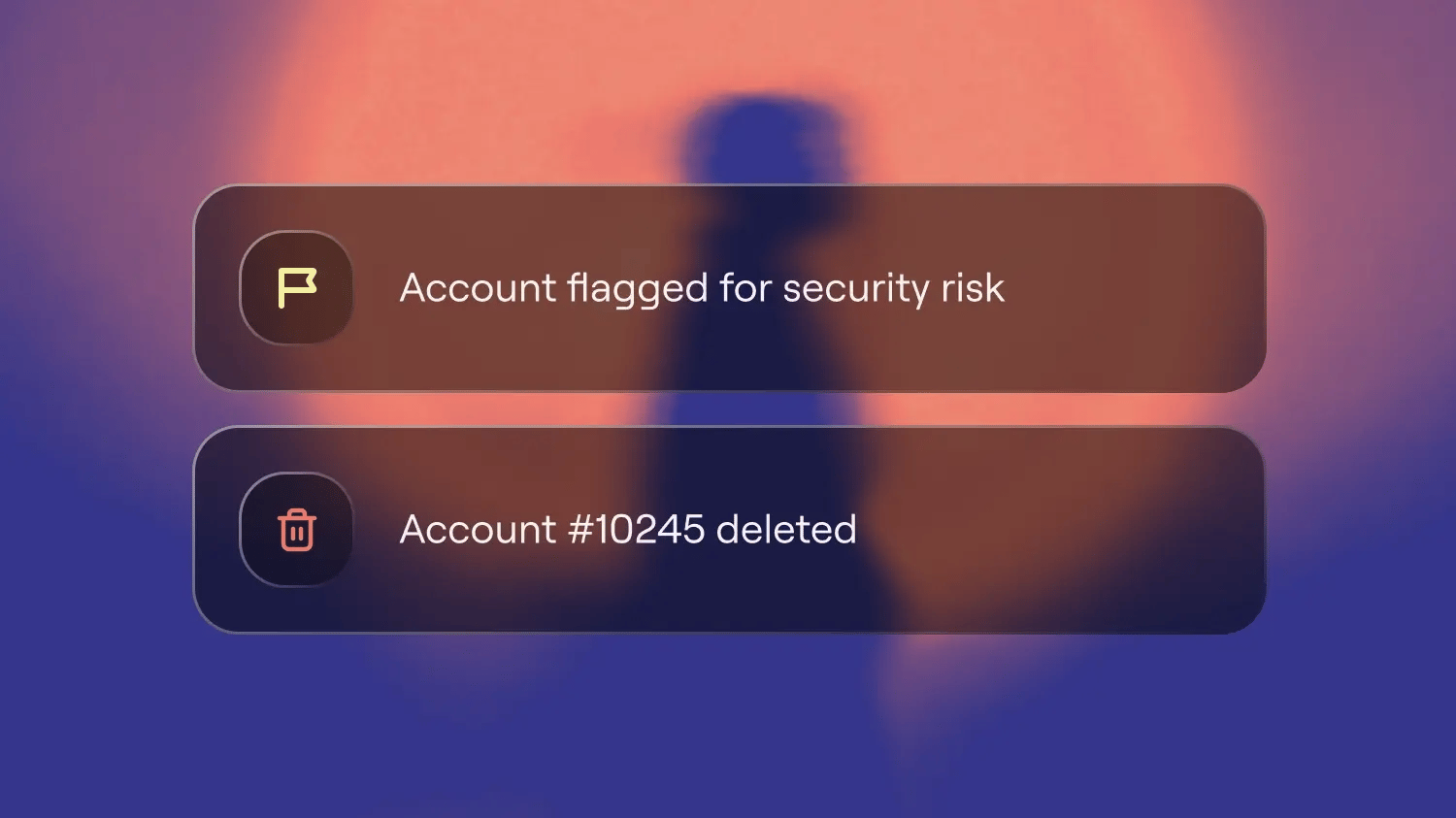
The well-meaning rogue agent
Not malicious. Just acting too broadly, too confidently, too fast, or without enough business context. It deletes the wrong records. It approves the wrong change. It escalates the wrong user. The action looks logical inside its narrow task. The damage is real outside it.
The principle
A hard gate, not another opinion.
Token requires an agent to stop at defined high-consequence points and prove the human before the action continues. Not a model's judgment. A line in the workflow the agent cannot cross.
Step 01
The agent calls the tool
The gate intercepts the call before it runs. Low-risk calls pass straight through, untouched and at full speed.
Step 02
The gate classifies the action
Allow, gate, or deny. High-consequence calls pause for biometric approval. Everything else keeps moving at machine speed.
Step 03
The right human approves
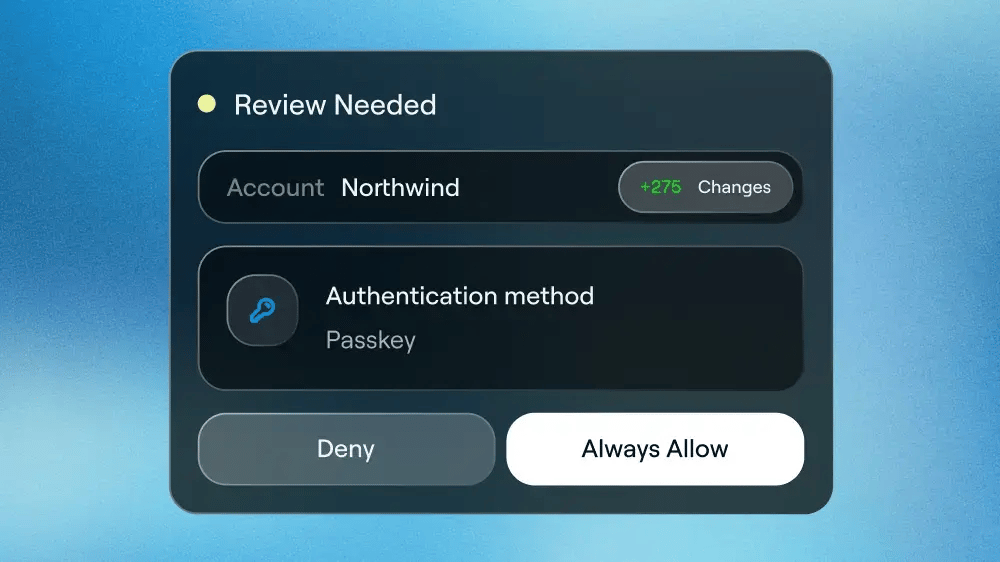
In a companion view, the human sees the real call, not the agent's claims, and approves with a fingerprint. Then it executes.
The differentiator
AI gives an opinion.
Token gives an outcome.
Biometric Hard Gates vs AI Oversight Agents and Policy Guardrails
Access rules check the human once, at login. Oversight agents score the request after. Token re-verifies the actual human at the moment the action fires, every time it carries consequence. Here is the gap.
Capability
AI Oversight Agent
Policy / Guardrail
Token Biometric Gate
Deterministic outcome
Survives prompt injection
Re-verifies the human at the point of action
Outside agent's reasoning
Prompt-proof
Tied to a single transaction
Before and after
Same agent. Same task. One line it cannot cross alone.
A finance agent receives an urgent vendor update with realistic details, a known executive name and a plausible reason. Here is what happens with and without Token.
Before Token
Trust releases the funds.
The agent checks the ERP, finds a matching vendor, updates the payment instructions, and schedules the transfer. A second agent reviews the request, but it is reviewing the same poisoned context. The funds move because the system trusted the agent to act. The anomaly is detected later. The money is already gone.
With Token
Proof releases the funds.
The agent prepares the vendor change, gathers the documents, and asks a second agent to verify. But before funds release, Token requires biometric approval from the human authorized for that transaction. Present with the device, verified by fingerprint. The agent can recommend. It cannot complete the action without proof of the human.
Where the gate belongs
Automate most. Gate what matters.
Reading a document, drafting a reply, summarizing a call, checking inventory, opening a ticket can all be left automated. The gate appears only where the business is harmed if the agent is wrong, manipulated, overpermissioned, or compromised. You define which actions and humans are authorized to approve them.
Finance agents
The agent prepares vendor payments, validates justification, and queues the transfer. Releasing funds and changing payment instructions stop at the gate.
- Vendor payments
- Updating payment instructions
- Approving contracts
- Executing trades
Support & data agents
The agent identifies records, summarizes the reason, and requests authorization. Deletion of sensitive data stops until the correct data owner or compliance role signs biometrically.
- Deleting customer records
- Releasing confidential information
- Moving regulated records
- Accessing customer data
IT & access agents
The agent collects the ticket, validates the user record, and proposes the change. Elevation of privilege stops at the gate. A fraudulent request dies at the point that matters.
- Privileged access changes
- Credential resets
- Creating service accounts
- Disabling security controls
Software & DevOps
The agent writes code, runs tests, opens a pull request, and prepares the deployment. Secrets, production deploys, and security policy changes require biometric approval first.
- Production deployments
- Modifying secrets
- Customer data access
- Changing security policy
Why biometric
Biometric assured identity answers a question AI cannot.
Is the correct human physically present and intentionally approving this action right now? Models can infer, and a policy engine can score. There are several platforms that layer in additional agents to safeguard, but nothing can layer in biometric verification like Token.
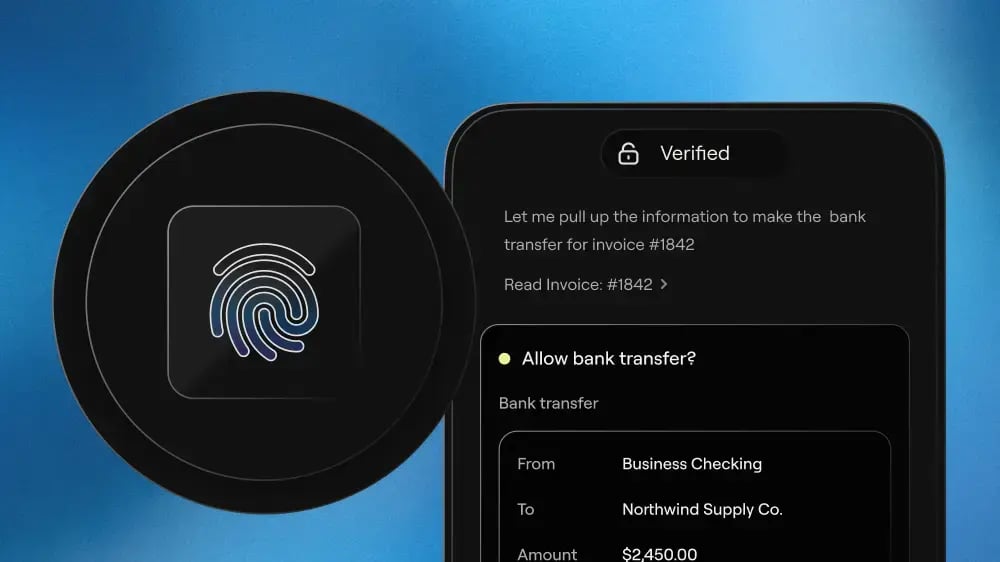
Bound to the individual
Approval is tied to a specific authorized human, verified by fingerprint on-device. No shared codes. No phished approvals. No credential to hand off.
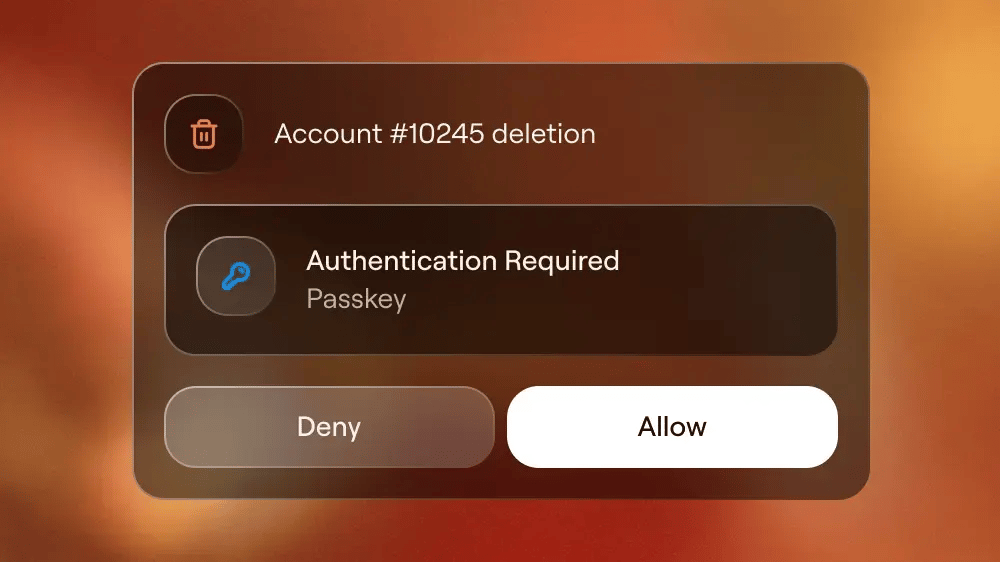
Stops both failure modes
Whether the agent was hijacked by an attacker or simply misread the task, the transaction stops. The gate requires the human either way.
An unambiguous audit trail
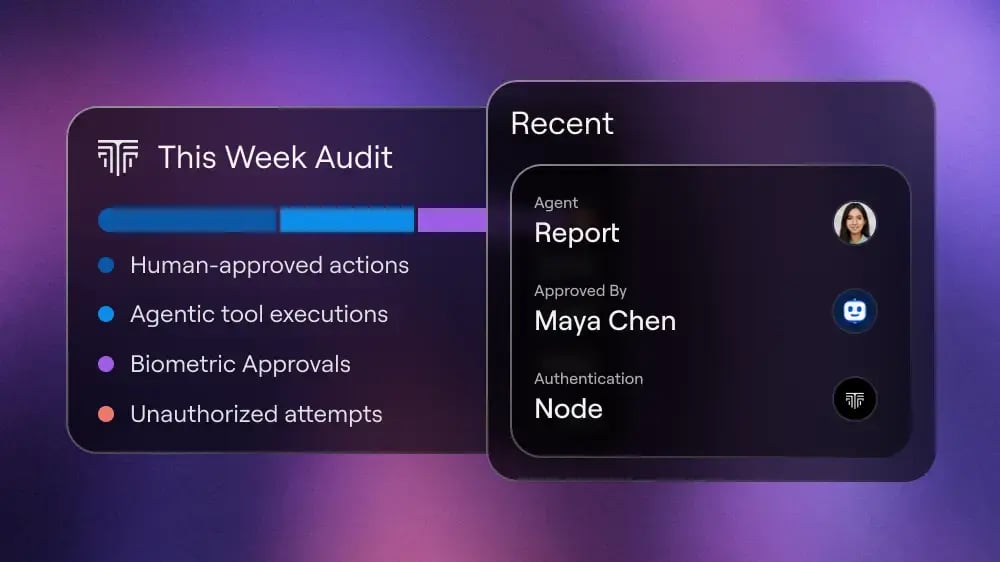
Every gated action carries the identity of the human who approved it. Not a service account. Not a shared credential. A specific, biometrically verified person.
Machine speed, human control
The agent works at full speed up to the line. The human approves only the moments that matter. Safe autonomy, not slower autonomy.
How it works
Three checkpoints, for one certain approval.
How Biometric Hard Gates Add Access Control to Agentic AI Workflows
Token gate into your agentic workflow. Define the high-consequence actions, the authorized human roles, and where the gate must sit before execution. The agent does the rest, right up to the line.
Step 01
The agent prepares the action
Gather context, validate the request, assemble the supporting detail. A second agent can inspect it for manipulation, missing context, or policy violations.
Step 02
The workflow stops at the gate
The high-consequence action cannot execute. Token requires biometric approval from the specific human authorized for that class of action.
Step 03
The right human approves with a fingerprint
Present with the device, verified on-chip, bound to that transaction. The action completes. Without the approval, it does not.
The impact
What changes when the human is required.
- Every gated action is bound to one verified human. A person, not a role, not a credential.
- 1 human
- Ways a prompt can talk past the gate. It sits outside the agent's reasoning.
- 0
- Of catastrophic actions are gated out of the box by Token's policies. No verified human, no execution.
- 100 %
Approval
Bypass
By default
FAQ
Agent autonomy, with the control points enterprises need.
Identity Assurance is a new category. These are the questions we hear most — answered directly.
What is AI agent security?
AI agent security is the practice of controlling what an autonomous AI agent is allowed to do once it is connected to real business systems. An agent can reason, plan, and call tools, which means it can also send money, delete data, or change access. Agent security covers the controls that keep those actions safe: least privilege, input validation, monitoring, and authorization at high-consequence points. Token provides the last one as a deterministic control. Before an agent completes a high-consequence action, the correct human must approve it with biometric assured identity.
What are the main security risks of AI agents?
Two categories matter most. The hijacked agent is manipulated by an attacker through prompt injection, poisoned context, compromised tools, or stolen credentials, and it carries out the attacker's intent while appearing to operate normally. The well-meaning rogue agent is not malicious, but acts too broadly or without enough context and takes a harmful action anyway. Both end the same way: an action that damages the business. Token stops both at the transaction point by requiring biometric human approval before the action completes.
What is prompt injection, and can it be prevented?
Prompt injection hides malicious instructions inside content the agent reads, such as a web page, a document, or a support ticket, to redirect the agent's behavior. Input filtering reduces it but cannot guarantee it, because the manipulation lives inside the agent's reasoning. A Token gate sits outside that reasoning. Even a fully manipulated agent cannot complete a gated action without biometric approval from the correct human. The attacker's intent stops at the gate.
How does Token secure AI agents?
Token places a biometric hard gate in the agentic workflow. The agent can prepare an action, gather context, and request authorization, but it cannot execute a high-consequence action until the correct authorized human approves with a live fingerprint on a Token device. The gate is a separate control plane, outside the agent's reasoning, enforced by cryptography. It is not a prompt the agent can bypass.
How is this different from human in the loop?
Human in the loop is often a suggestion the agent can reinterpret or route around. A Token gate is human authorization in the transaction path, enforced by cryptography. The action cannot complete until the biometric requirement is satisfied. It is not advice to the agent. It is a control the agent cannot cross.
Why not use another AI agent or a guardrail to review the action?
A review agent, a guardrail model, and a policy engine all add value, and Token works alongside them. But AI checking AI is probabilistic. The reviewer can be fooled by the same prompt injection or poisoned context that fooled the first agent. For high-consequence actions, enterprises need proof, not another model's opinion. Token is the deterministic control the probabilistic layer cannot provide.
Which agent actions should require approval?
You decide. Most actions stay automated: reading, drafting, summarizing, recommending. The gate belongs only on actions that damage the business if the agent is wrong or compromised. Common examples include sending money, deleting data, changing access rights, releasing confidential information, modifying production systems, updating payment instructions, and creating service accounts.
How does this fit with least privilege and the OWASP Agentic AI guidance?
It completes them. Least privilege, scoped permissions, input sanitization, and monitoring all reduce how often an agent can reach a harmful action. They are probabilistic controls. Token adds the deterministic control these frameworks call for at the highest-risk step: human authorization before a high-consequence action executes. Defense in depth, with proof at the point that matters.
How does Token know the right human approved?
Approval requires a live fingerprint match on a Token device, bound to a specific authorized user and a specific transaction. The credential is hardware-bound and cryptographically verified. There is no shared code to phish, no push to approve blindly, and no credential to hand off. Approval proves the human, not just access to a device.
Does requiring approval slow agents down?
How do we add Token gates to our agentic workflows?
Token provides the code, prompts, and integration patterns to add biometric approval gates into agentic workflows. Developers and security teams define which actions require approval, which human roles are authorized, and where the gate must sit before execution. It works alongside your existing oversight agents and policy engines.
Get started
Give your agents room to work. Keep the authority that matters.
See how Token drops biometric hard gates into your agentic workflows, and how quickly you can place deterministic approval around your highest-consequence actions.