Kevin Surace
2 minute read
Another week, another breach. This time it’s Ingram Micro, one of the largest tech distributors on the planet. Systems down for days. Operations halted. Now they’re staring down a ransomware demand, possibly for millions.
The entry point?
A GlobalProtect VPN login protected by legacy MFA.
You can’t make this up.
Reports suggest attackers used MFA fatigue tactics—repeatedly hitting users with push notifications until one person, just trying to stop the noise, tapped “approve.”
Just like that, the gates opened.
And everything behind them was up for grabs.
This isn’t the first time. It won’t be the last. Because legacy MFA is dead.
Token.
TokenCore™ Wearable and TokenCore™ Portable were built specifically to prevent this exact attack vector. Let’s break it down.
Token authenticators only work when they’re physically next to the machine logging in. Not nearby. Not across the room. Within feet.
If a hacker’s trying from a remote spoofed system? Game over. The device won’t respond.
Token uses true public/private key encryption, not shareable secrets like one-time codes or SMS. Credentials are locked to the device and the domain. No code to phish. Nothing to forward. Nothing to replay.
No fingerprint? No login.
A hacker can’t fake your thumb. A social engineer can’t guess your biometrics. Only you can authenticate.
Even if the attacker creates a pixel-perfect spoofed login page, it won’t matter.
Token devices check the exact domain during login and if it doesn’t match the registered site, authentication fails silently.
No error. No warning.
Just: “Nope.”
Ingram Micro didn’t have Token.
So they got owned.
And so will every other enterprise still relying on push apps, SMS codes, or TOTP tokens to “secure” their network access.
This is 2025.
Your adversaries have AI-generated phishing, spoofed login pages, cloned VPN portals, and more social engineering playbooks than you can imagine.
They don’t need to break in. They just need one employee to click.
Security awareness training won’t save you.
MFA apps won’t save you.
Hope and policy won’t save you.
Only phishing-resistant architecture will.
And Token is that architecture.
A single MFA approval can take down an entire billion-dollar enterprise.
It happened to Ingram. It happened to Aflac. Hawaiian Airlines. Qantas. MGM. Caesars.
Who’s next?
If your MFA can be phished, spoofed, or fatigued, you’re already compromised.
You just don’t know it yet.
Get Token. Or get ransomed.
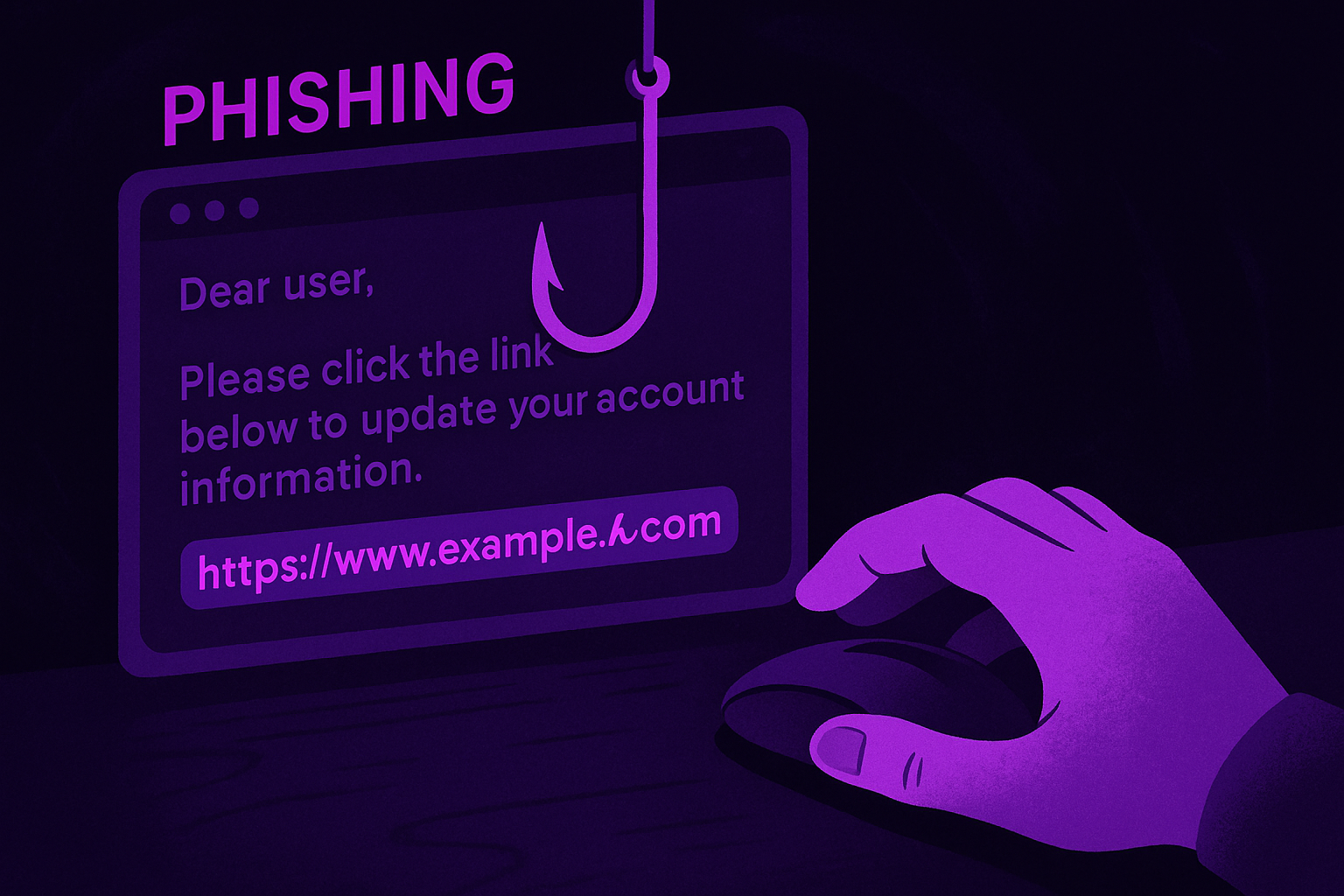
Phishing attacks no longer rely on obvious tells. Misspelled words, generic greetings, and suspicious domains are yesterday’s problem. Today, the most effective phishing campaigns use Unicode characters that look identical to the characters they replace. The fake URL looks real. The fake site looks real. There is nothing for the human eye or most security tools to catch. The deception happens at a level most people never inspect.
A single cyberattack can be devastating for any business but even more so for smaller businesses. In 2021, 46% of data breaches impacted small and medium (SMB) businesses. In addition, the average cost of a single breach against SMBs increased from $101K in 2020 to $105K in 2021. In contrast, the average breach cost for larger enterprises fell between 2020 and 2021. It is incredibly difficult for small businesses to recover from a data breach and within a year of a data breach, more than half of small businesses fail.

A new incident response report from Palo Alto Networks Unit 42 — drawn from 750 real-world cases — finds that identity-based techniques drove 65 percent of initial intrusions. Identity played a role in nearly 90 percent of all breaches, from initial access through lateral movement and data exfiltration. This is not a technology failure. It is an architecture failure. And it has a precise solution.
Subscribe to The Assured Identity Brief for sharp insights on identity security, authentication, and the threats security leaders must stay ahead of.