Compare TokenCore™ vs YubiKey

TokenCore™ vs YubiKey

Unlock absolute identity assurance and security.

Compare TokenCore™ vs YubiKey across FIDO2 authentication, enterprise deployment, hardware options, and advanced security features.

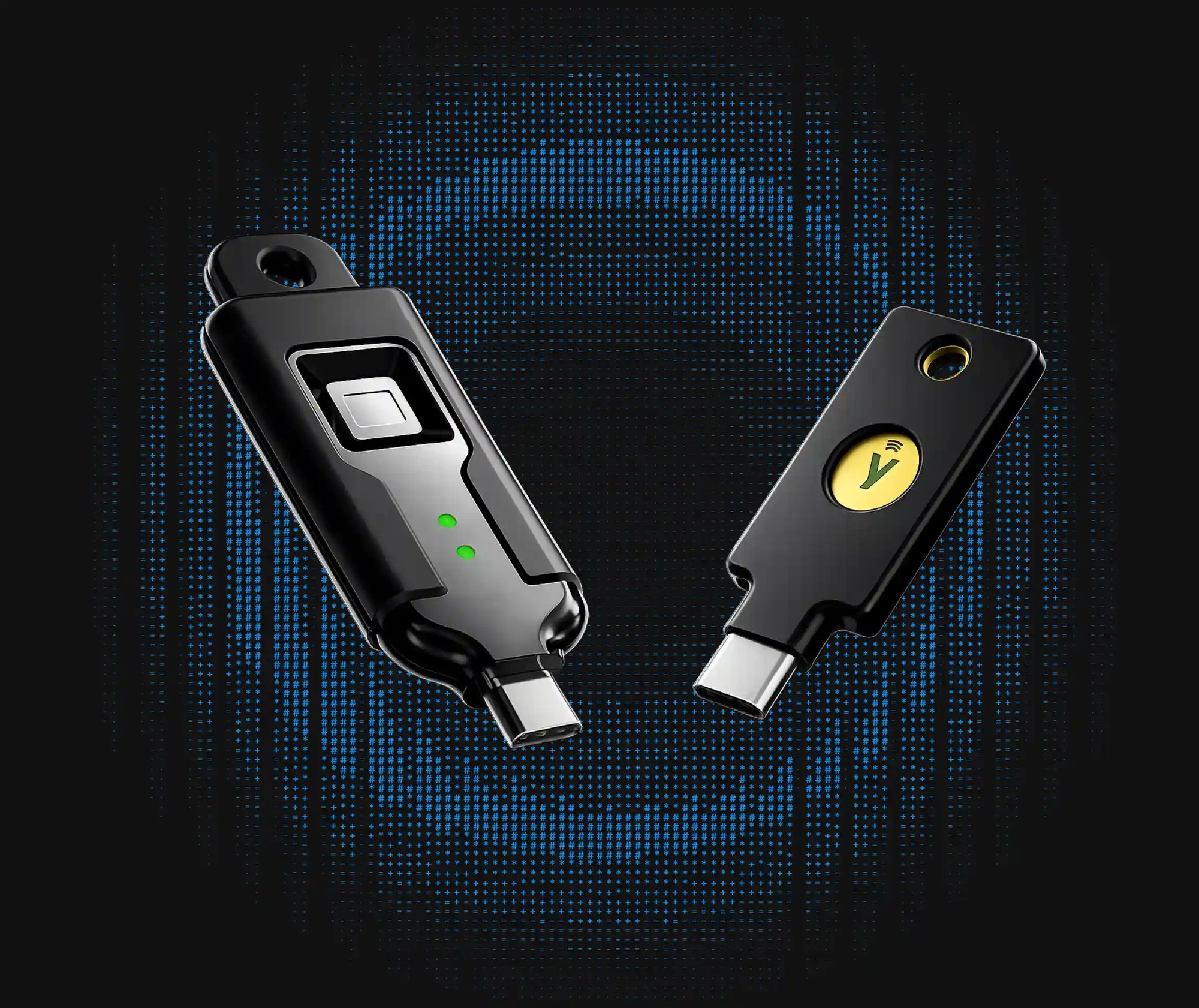
Token BioStick with fingerprint sensor beside a YubiKey security key

Capability Overview

TokenCore™ vs YubiKey at a Glance

Both platforms are built on FIDO2 (WebAuthn, CTAP), the open standard for phishing-resistant authentication. The difference is what each one proves at the moment of login. YubiKey confirms possession of a device. TokenCore™ confirms the person holding it.

Capability YubiKey TokenCore™
FIDO2 Standards-based, phishing-resistant passwordless authentication.
Yes
Yes
Passkeys Secure passwordless sign-in using FIDO2 passkey credentials.
Yes
Yes
USB-A/C Supports both USB-A and USB-C connectivity across devices.
Yes
Yes
NFC Enables tap-to-authenticate on NFC-enabled mobile devices and laptops.
Yes model dependent
Yes
BLE authentication Wireless Bluetooth Low Energy authentication without requiring a USB connection.
No
Yes
Biometric authentication Verifies users with on-device fingerprint recognition.
Limited to Bio Series
Yes default on all products
Over-the-air security updates Securely receives firmware and security updates without replacing the device.
No
Yes
Domain Binding Restricts authentication to trusted domains to strengthen phishing protection.
No
Yes
Proximity authentication Automatically authenticates users based on device proximity.
No
Yes
Shared workstation support Optimized for environments where multiple users securely access the same device.
Limited
Yes
Wearable options Wearable form factors improve convenience, accessibility, and adoption.
No
Yes
Enterprise deployment Scalable provisioning, distribution, and rollout across large organizations.
Yes
Yes
Device lifecycle and policy management Central configuration, policy enforcement, and revocation across a deployed fleet.
Limited
Yes

Common Ground

Both Products Deliver Strong Hardware Authentication

Yubico rapidly expanded the category

YubiKey is a founding member of the FIDO Alliance, with a mature enterprise install base and broad ecosystem support across identity providers. FIPS-certified models are available for organizations with strict compliance requirements. That foundation is credible. This is the same foundation TokenCore™ builds on.

The difference isn't the standard. It's what happens after the key is presented.
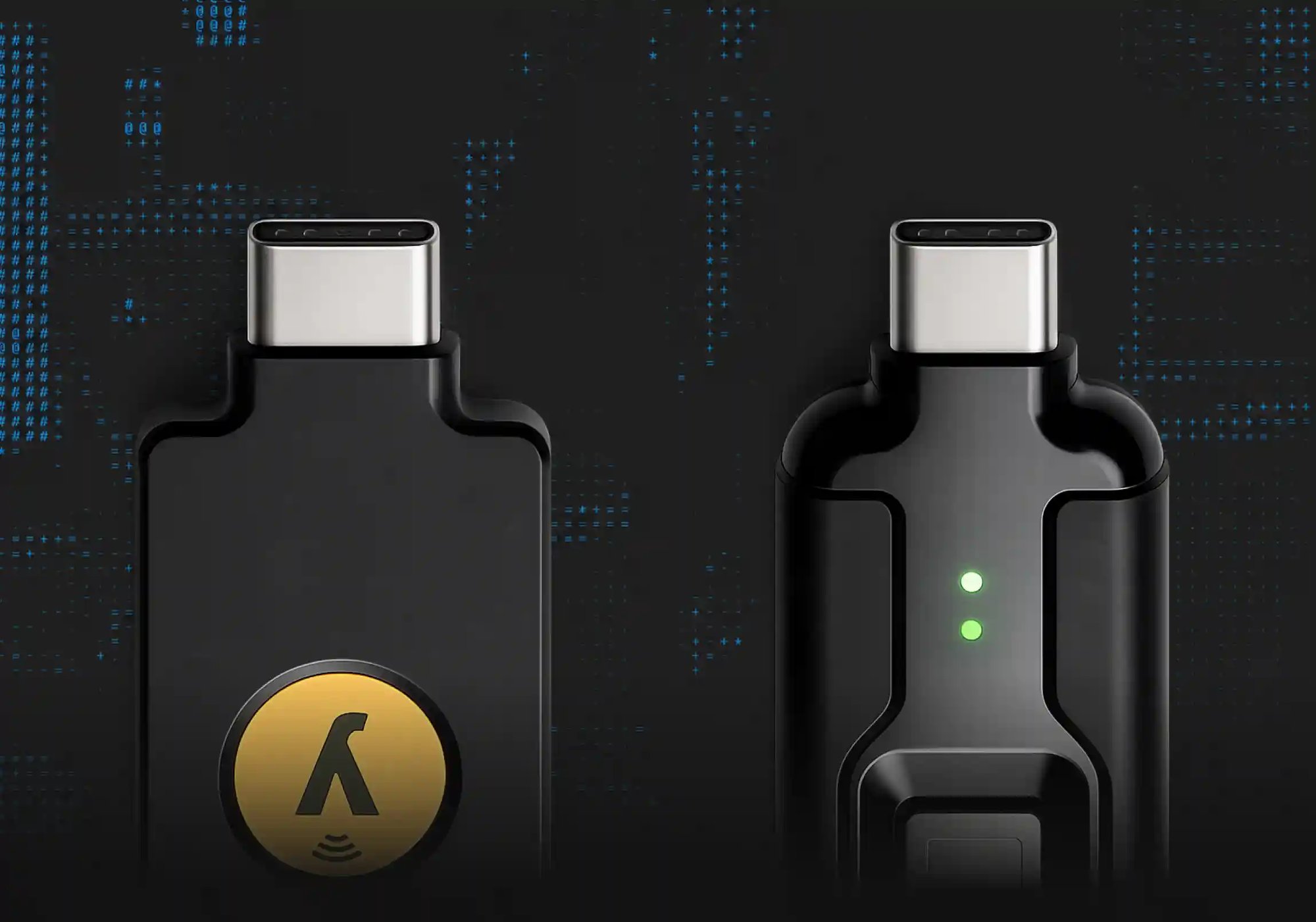
USB-C connectors on a YubiKey and a Token BioStick shown side by side

Beyond the Standard

Where TokenCore™ Goes Further

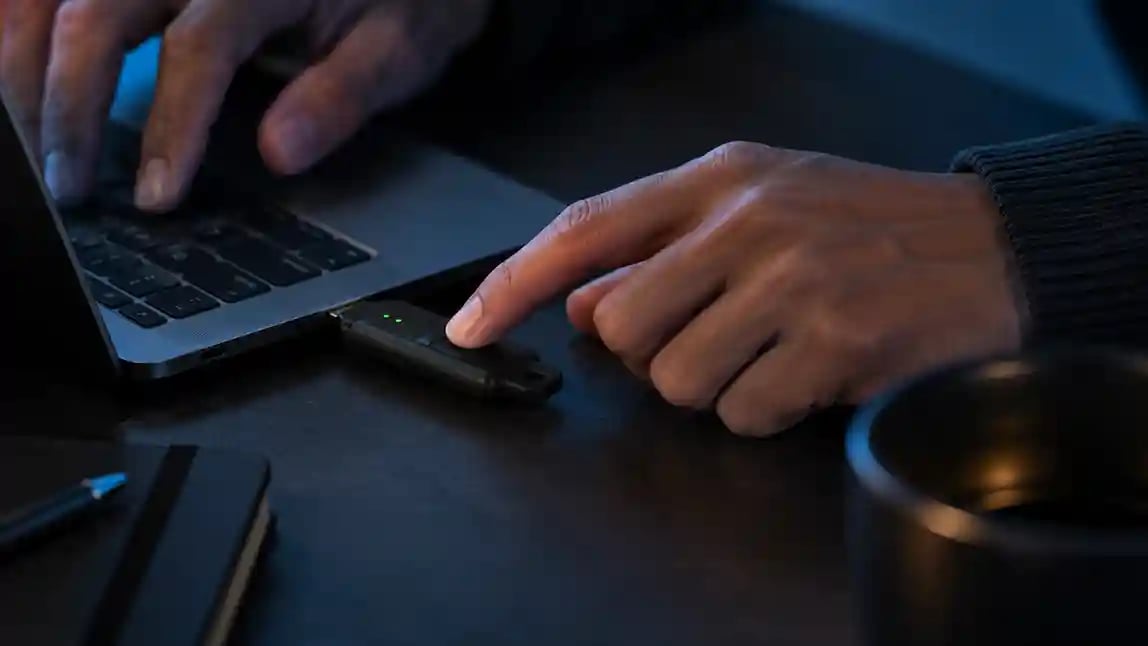
Hand pressing the fingerprint sensor on a Token BioStick plugged into a laptop

Identity, Not Possession

Biometric Authentication is Built into All Products

A security key confirms someone has the device. A PIN confirms someone knows a number, and numbers get shared on shared workstations. TokenCore™ replaces both with a live fingerprint match, on every device, as standard.

The question worth asking of any biometric key is whether the biometric can be bypassed. On the YubiKey Bio Series, Yubico documents that after three unsuccessful fingerprint attempts the key prompts for the FIDO2 PIN instead. The fingerprint is a convenience layer with a route around it. On TokenCore™ the fingerprint match is the gate. No PIN path. No code path. No fallback that authenticates without the enrolled person present.

That carries into assurance. An authenticator that accepts a PIN when the biometric fails is only ever as strong as the PIN behind it.


On-device fingerprint matching. Reduced PIN sharing. Lower support overhead. The person is the credential.


Hand pressing the fingerprint sensor on a Token BioStick plugged into a laptop

Built for How People Work

Built for Modern Enterprise Workflows

Mobile-first teams, shared workstations, clinical environments, manufacturing floors, aerospace and defense, government, and OT environments all authenticate differently than one user at one desk. TokenCore™ is built for that variance. Biometric-first, wireless by default, equally at home on a shared terminal or a factory floor.
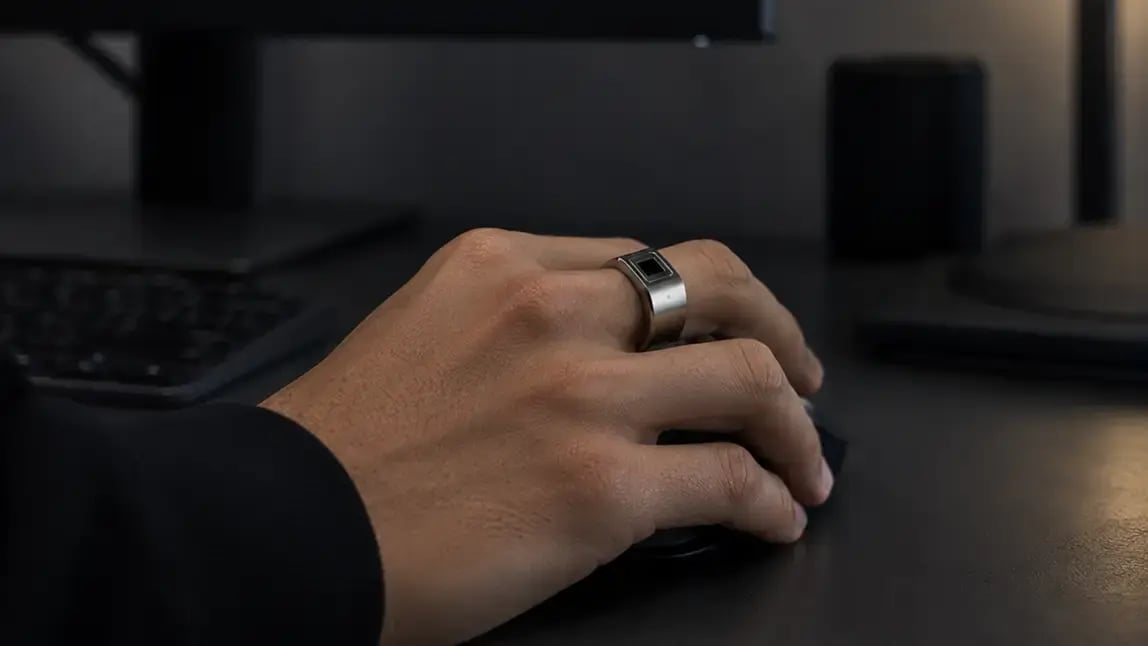
Token Ring worn on a hand resting on a mouse at a desk workstation

Always With the User

Wearable Authentication

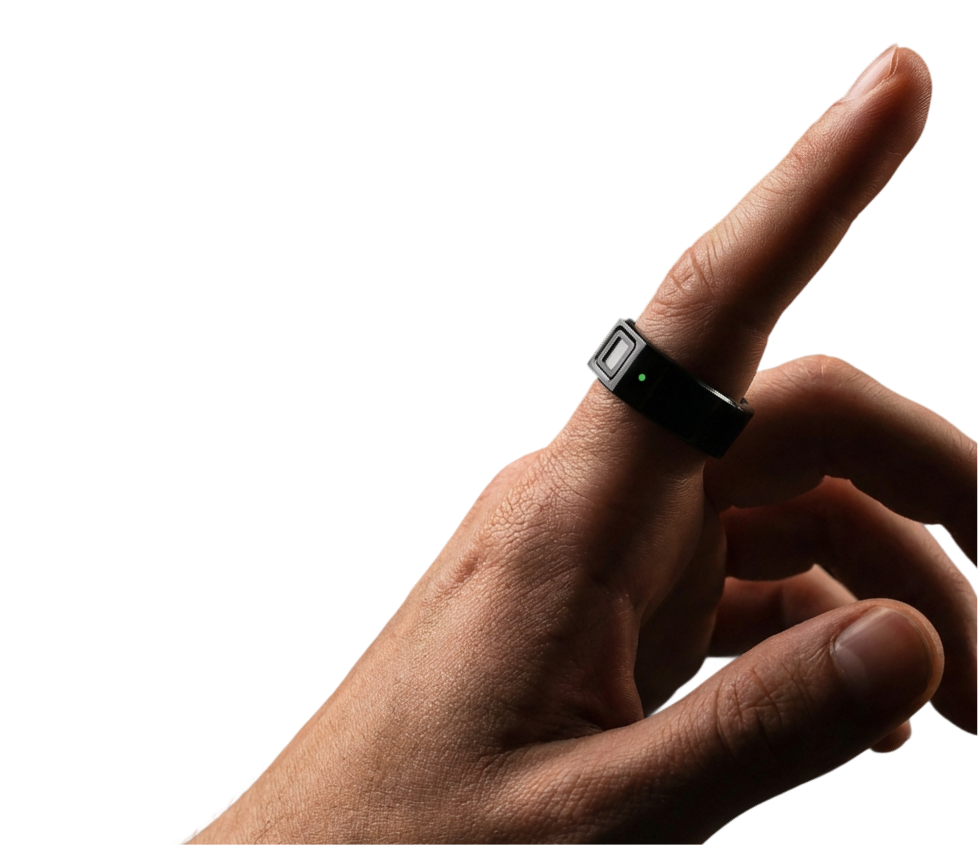
TokenCore™ Wearable and TokenCore™ Node give identity a form factor that stays with the person, not the desk. The person literally becomes the credential, which leads to fewer devices lost, and higher adoption. Hands-free authentication for frontline workers, and any environment where hardware needs to be worn, not carried.

Clinician in scrubs using a tablet while wearing a Token wristband authenticator

Wireless by Design

Bluetooth Low Energy (BLE) Authentication

BLE is one of the clearest differences between the two platforms. TokenCore™ authenticates wirelessly: tap-on-glass for mobile workflows, instant re-authentication on shared workstations, nothing to plug in. Presence replaces insertion.
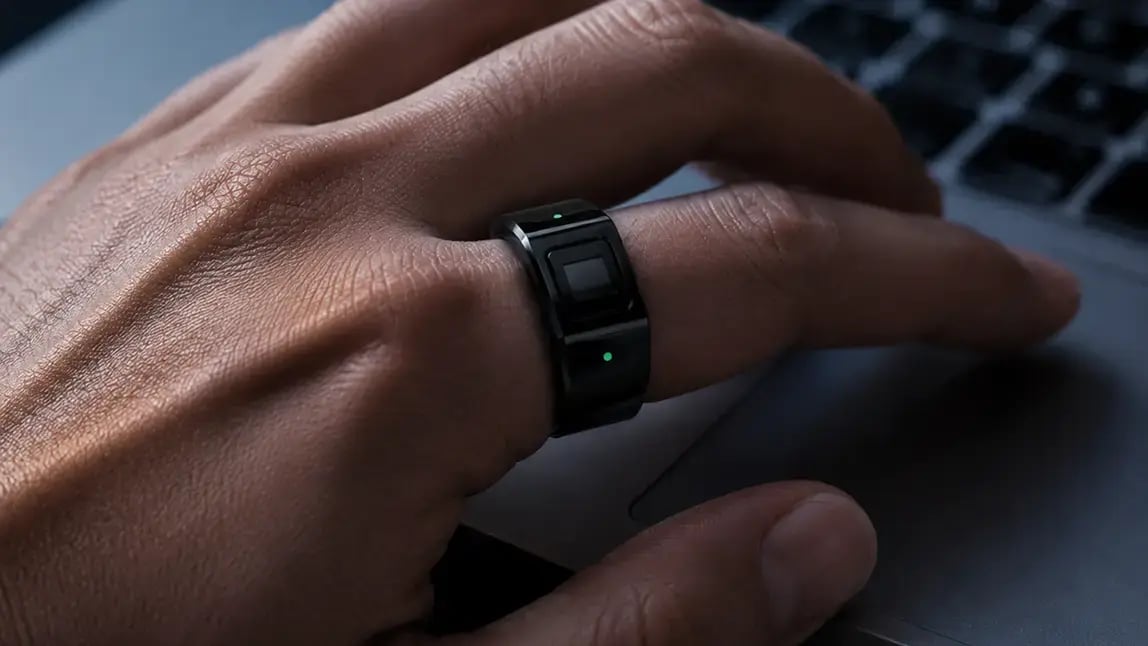
Close-up of a Token Ring with active status lights on a hand above a laptop trackpad

Phishing Resistance, Extended

Domain Binding

Domain Binding restricts authentication to domains the organization has explicitly trusted. A credential will not authenticate against an untrusted origin, even where it is otherwise valid. Phishing risk is reduced at the protocol level, not through user vigilance.
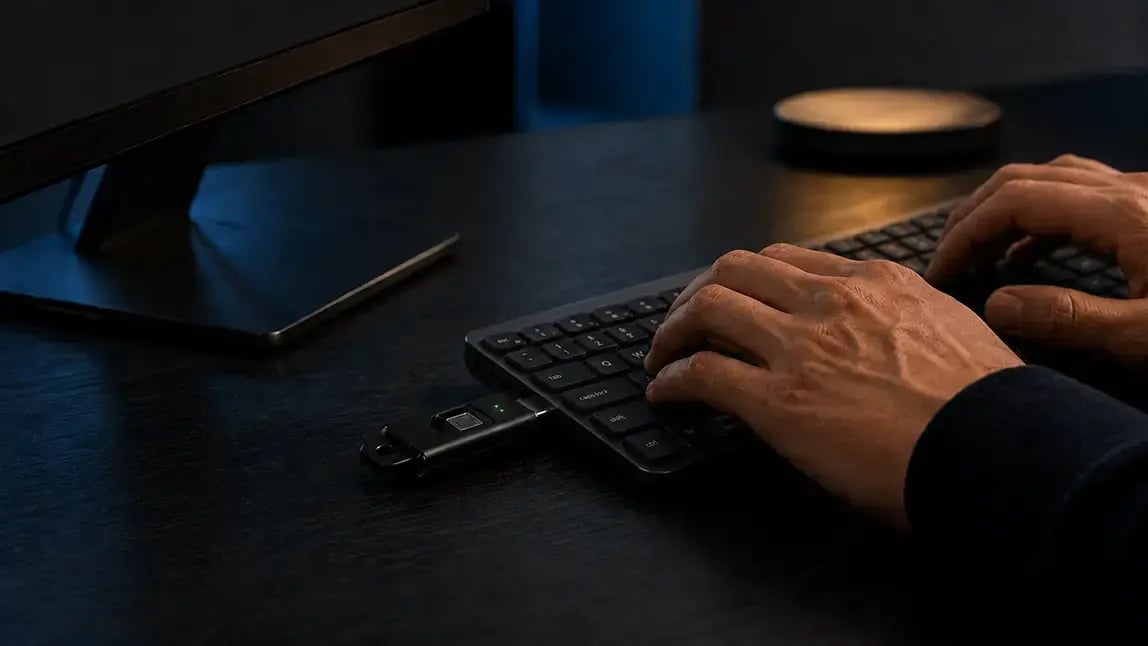
Token BioStick resting beside a wireless keyboard as a user types at a desktop

Presence as Proof

Proximity Authentication

TokenCore™ authenticates automatically when the verified user is physically present. No tap. No insertion. No manual step. Access is granted because the person is there, or it isn't granted at all.

Token wristband on a user's wrist as they interact with a data dashboard on a tablet

Current by Default

Security Updates Without a Hardware Refresh

Yubico states that YubiKey firmware cannot be updated once a key is programmed, and presents that as a deliberate security decision. A key that cannot be changed cannot be changed by an attacker either. It is a defensible position.

It also decides what happens when a firmware issue is found. The remedy is a new key. Across a deployed fleet that means procurement, reissue, re-enrollment, and a window in between where the affected keys are still in use.

TokenCore™ updates over the air. Firmware and security updates reach deployed devices in place, so a fleet stays current without a hardware refresh and without a gap between disclosure and remediation.
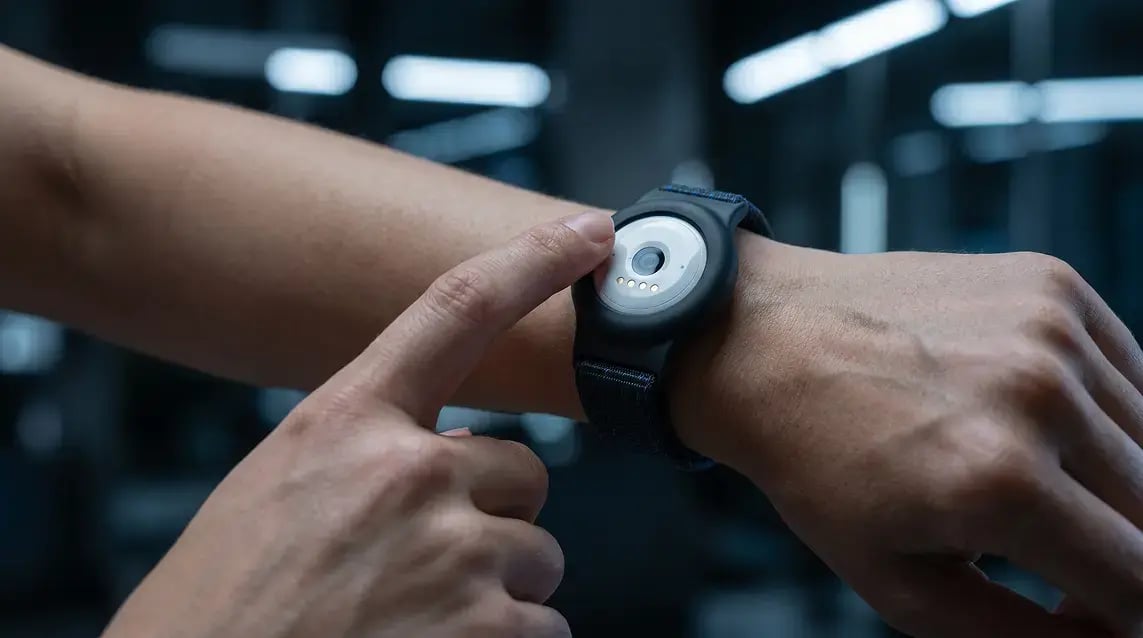
node-watch

Managed at Scale

Device Management, Not Only Device Delivery

Yubico's Customer Portal is built around getting keys to people. Inventory, subscriptions, orders, shipment tracking, and fulfillment across 199 locations, with API integration into IT service catalogs. At enterprise scale that is real capability, and it is well built.

What it does not cover is the device once it arrives. Configuration and policy sit with each individual key.

TokenCore™ manages thousands of devices from one place: lifecycle, policy, and integration with the identity management system already in use. Provisioning, updates, and revocation are fleet operations rather than desk visits.
Frame 1991428483

Deployment

Enterprise Deployment Comparison

A spec sheet is a starting point. Deployment is the real test. Over-the-air security updates mean fleets stay current without a hardware refresh, and that holds true whether it's one user or ten thousand. What changes by environment is the workflow it has to fit into.

Single-user provisioning through standard IAM enrollment. No admin overhead beyond the initial rollout.

Biometric match-on-use means the same terminal serves multiple people without a shared PIN or a badge left in a drawer.

Centralized provisioning and over-the-air updates keep a fleet current without touching a single device by hand.

Fast, hands-free authentication for staff moving between shared workstations on a ward or in a lab.

BLE wireless authentication built for gloved hands and shop-floor conditions, not a USB port.

Tap-on-glass authentication at POS terminals, built for staff turnover and shift changes.

Domain Binding and proximity enforcement for agencies that need phishing resistance to hold up under audit.

Shared-lab and shared-workstation support for institutions where devices serve more people than staff.

Fit

Which solution is right for your organization?

Make a decision based on your needs

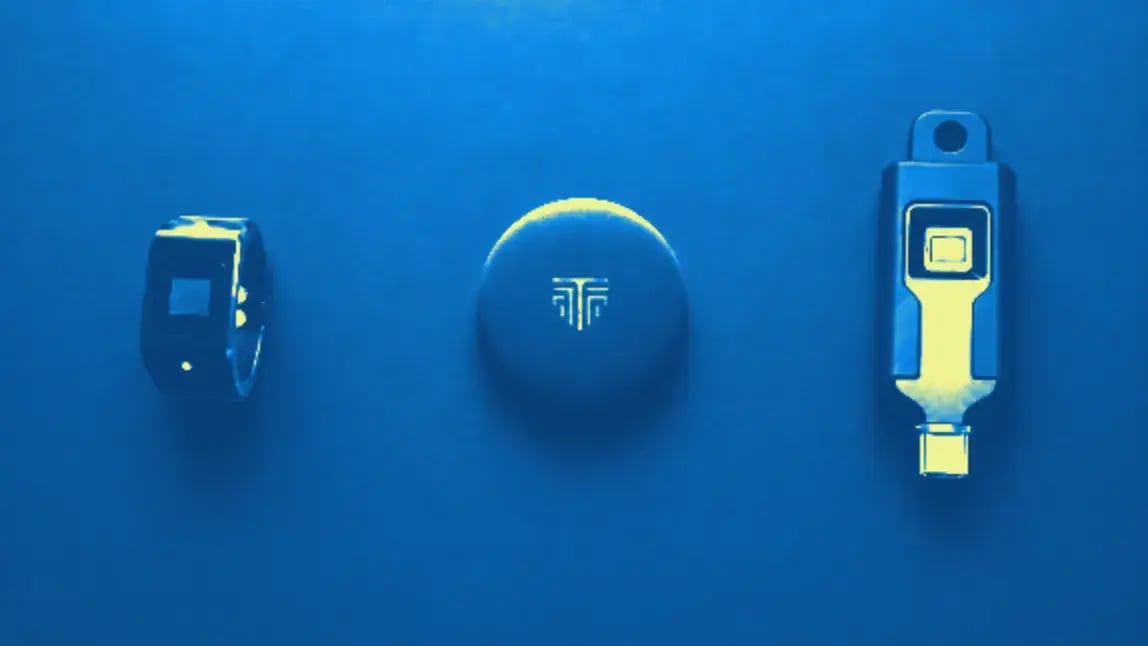
Token Ring, Token Node, and Token BioStick product lineup

Choose TokenCore™ If You Need

  • BLE wireless authentication
  • Domain Binding and proximity enforcement
  • Wearable hardware
  • Shared workstation support
  • Frontline, clinical, and retail environments
  • Over-the-air security updates
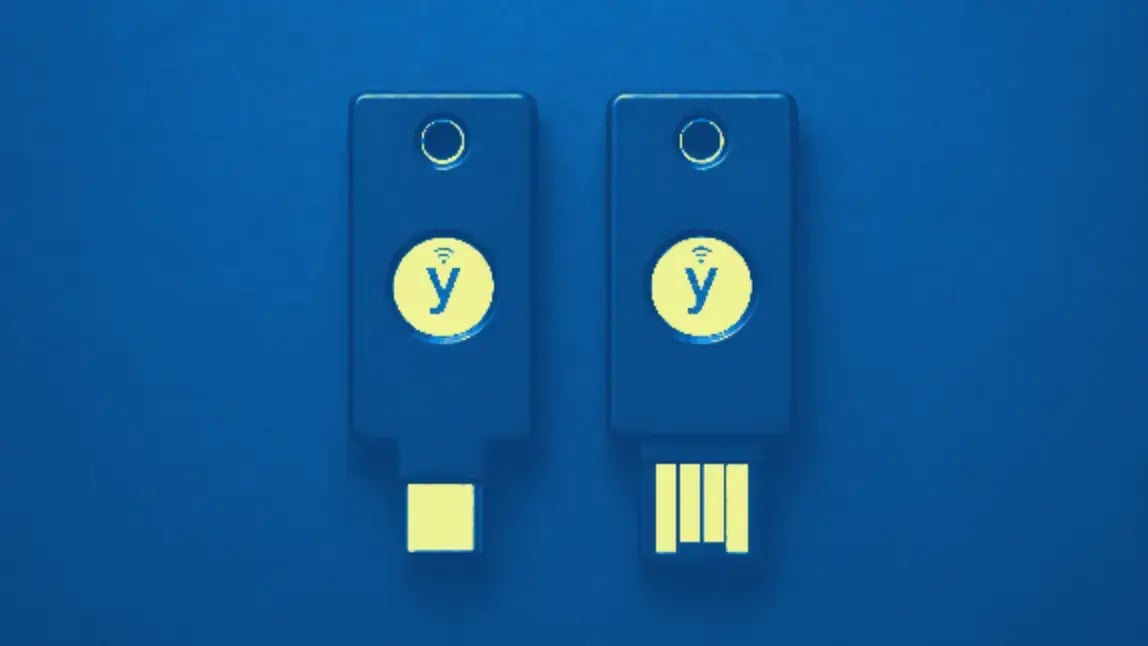
Two YubiKey USB security keys shown side by side

YubiKey May Be Suitable If

  • Traditional USB-based workflows
  • Standardized on the Yubico ecosystem
  • No BLE or proximity requirement
  • No wearable form-factor need
  • Single-user, single-device deployments
  • Existing Yubico procurement in place

See It in Action

See How TokenCore™ Fits Your Deployment

The proof isn't in the comparison. It's in the deployment. See how TokenCore™ fits alongside your existing IAM stack and where it extends what a traditional security key can do.

Comparison accurate as of July 31, 2026, based on publicly available Yubico product and documentation pages.

YubiKey® and Yubico® are registered trademarks of Yubico AB. TokenCore is not affiliated with, endorsed by, or sponsored by Yubico.

Biometric fallback behavior refers to the YubiKey Bio Series, currently the only YubiKey line with an integrated fingerprint sensor. NFC, connection, and form factor availability vary across the wider YubiKey range and are indicated by model in the comparison table above. Yubico documents the fingerprint-to-PIN fallback in the YubiKey Bio Series technical manual and its firmware position in YubiKey firmware is not upgradable. TokenCore™ capabilities reflect current product information.