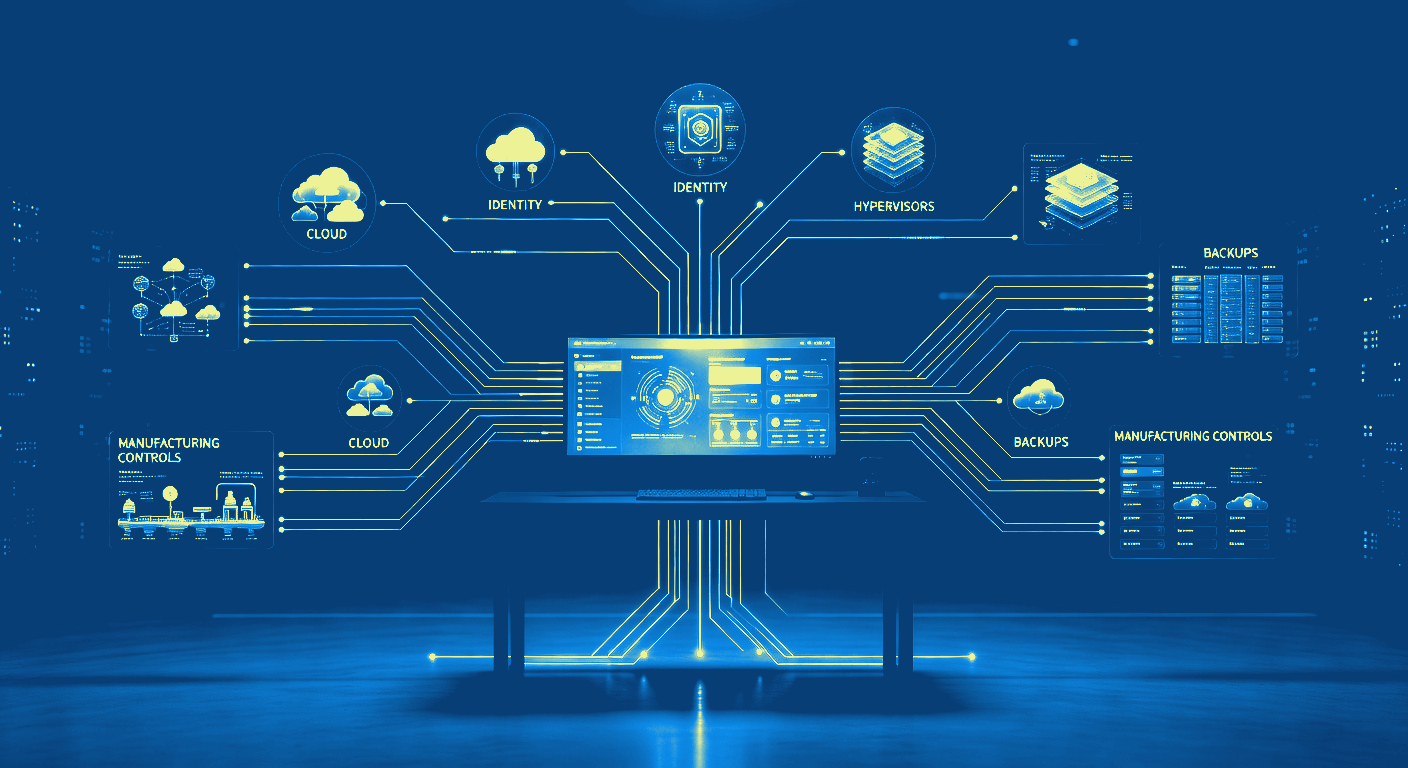
Japan Is Facing a Cyber Emergency. The Front Door Is Identity.
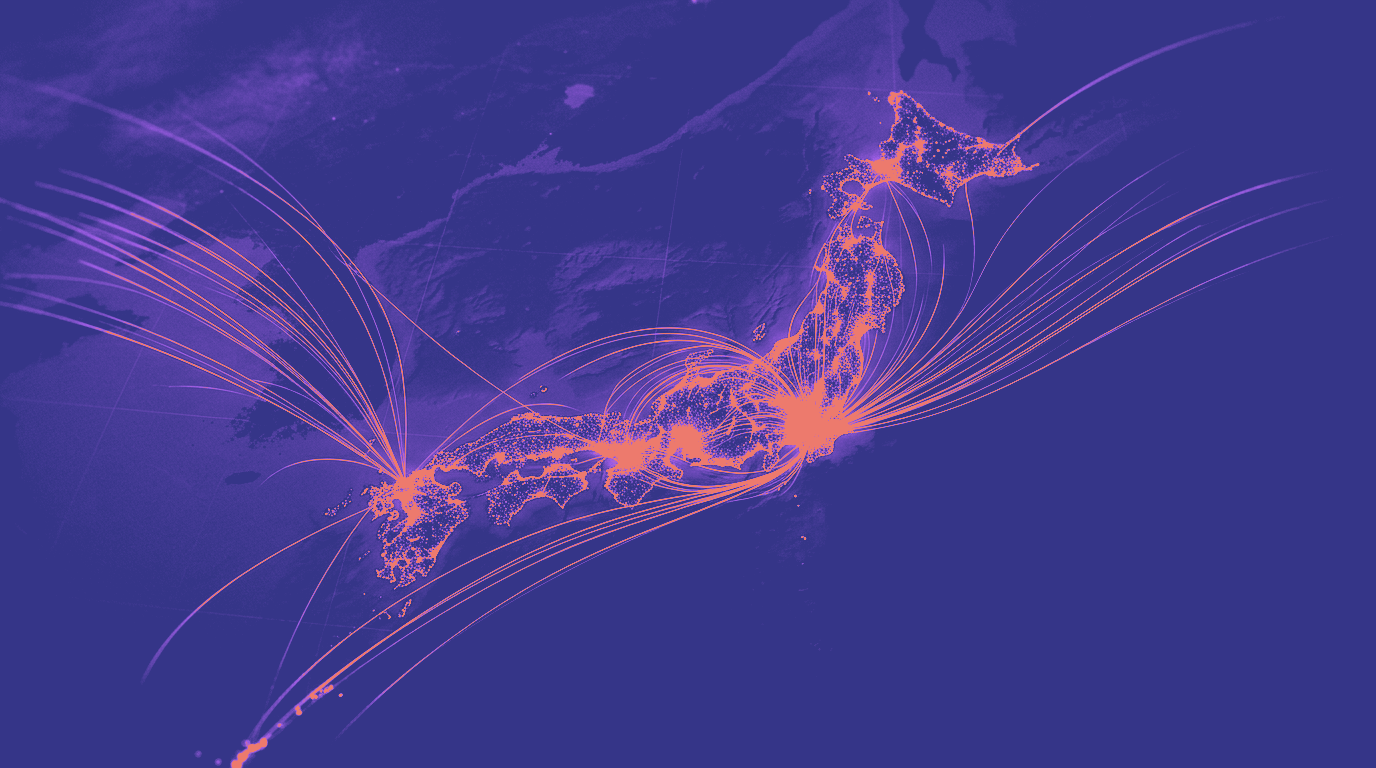
Japan is experiencing a remarkable wave of cyberattacks. The head of the ruling Liberal Democratic Party’s cybersecurity organization recently described the situation as a “state of emergency in cyberspace.” More than 20 major organizations have reportedly suffered attacks, affecting industries ranging from financial services and transportation to retail, cloud infrastructure and hospitality. Japan’s National Cybersecurity Office has separately warned about a succession of unauthorized access and data leakage incidents across numerous sectors.
Ransomware is moving in the opposite direction from the rest of the world. According to Microsoft data cited in recent reporting, ransomware attacks globally declined 3 percent between July 2025 and June 2026. In Japan, they increased 67 percent. But underneath the extraordinary numbers is a more important cybersecurity story.
This is increasingly an identity problem. Attackers do not always need to defeat sophisticated firewalls, discover a new software vulnerability or write exotic malware. If they can obtain credentials, manipulate an authentication process, compromise a remote access account or convince someone to authenticate them, much of the security infrastructure behind that login becomes irrelevant. They are not necessarily breaking in. They are logging in.
Japan’s phishing problem shows just how large this attack surface has become. The Council of Anti Phishing Japan recorded 94,661 phishing reports in September alone, up 15 percent from August, along with more than 49,000 unique reported phishing URLs. Its 2026 guidance also warns that generative AI is making phishing messages more natural and personalized, reducing many of the clues people previously relied upon to recognize an attack.
That matters because phishing is fundamentally an identity attack. The objective is usually not to defeat encryption. It is to persuade a legitimate user to surrender the information or perform the action necessary for the attacker to assume that user’s identity.
The important question is therefore not simply, “How do we detect the attacker once they are inside?” It is, “Why are we allowing a remote attacker to authenticate as an employee in the first place?”
Where Token Changes The Equation
For the subset of attacks that begin through stolen credentials, phishing, remotely abused authentication or compromised user identity, this is exactly the problem Token was designed to eliminate.
TokenCore devices replace shareable authentication factors with dedicated biometric hardware. Authentication requires the physical device, the registered user’s fingerprint and a cryptographic relationship with the legitimate service.
There is no six digit authentication code for an employee to give to an attacker. There is no push notification that can be approved under pressure. There is no password that becomes sufficient merely because someone convinced a help desk to reset it.
Most importantly, FIDO2 origin binding means the credential is associated cryptographically with the legitimate domain. A fake website can look perfect. It can use the company logo, duplicate the login page and display exactly what an employee expects to see. But appearance is irrelevant to the authenticator. The cryptographic origin is either correct or it is not.
Token adds another hard gate by requiring the user’s fingerprint on the dedicated hardware itself, along with physical proximity to the device being accessed. Token’s architecture is designed so that a remote attacker cannot simply possess a password or talk someone through an authentication process and become that person.
That distinction becomes enormously important in the age of AI. You cannot reliably train thousands of employees to identify every fake website when AI can generate convincing emails and sites almost instantly. Japan’s own phishing authorities are warning that natural AI generated language is making traditional visual and linguistic warning signs increasingly ineffective.
The better security architecture assumes that eventually someone will click. Then it makes the click useless.
What Token Would & Wouldn't Have Stopped
It is important to be precise. Token would not prevent every cyberattack currently affecting Japan. If an attacker exploits an unpatched vulnerability directly in a public server, compromises software in the supply chain or gains access through some path that requires no user authentication, identity technology is not the answer.
But where the attack requires the attacker to successfully impersonate an authorized user, use stolen credentials, relay an authentication, phish an employee or obtain access through a compromised login, properly deployed Token authentication changes the outcome.
The attacker can have the username. The attacker can have the password. The attacker can create the perfect phishing page. The attacker can call the employee. The attacker can call the help desk.
None of those things provide the attacker with the authorized physical Token device, the legitimate user’s fingerprint and the required cryptographic relationship with the real domain.
Provided Token is required for that access and weaker fallback authentication has been eliminated, the identity portion of the attack stops there.
That Is The Larger Lesson From Japan
The cybersecurity industry has spent enormous amounts of money attempting to identify attackers after they enter a network. That work remains necessary. But Japan’s crisis is another reminder that one of the highest leverage places to stop an attack is still the front door.
If an attacker enters through an unpatched server vulnerability, fix the vulnerability. If an attacker enters through a software supply chain, secure the supply chain. But if the attacker enters because the system accepted the wrong human being as the right human being, that is an identity architecture failure. And those failures are increasingly preventable.
The next generation of enterprise authentication cannot simply make phishing more difficult. It needs to make successfully phishing authentication irrelevant.
That means no reusable secrets. No remotely shareable authentication codes. No approvals that can be socially engineered. No authentication without proof that the correct person, the correct hardware and the correct destination are all present at the same time.
Japan may be experiencing the crisis today. The lesson applies everywhere. Attackers have learned that the easiest way through the front door is often to convince our systems that they belong there.
It is time to build a front door that knows the difference.