The reported $6.3 billion Binance breach may become one of the most consequential cyberattacks ever. Early reporting points to a compromised DevOps engineer’s laptop and subsequent access to internal systems that enabled unauthorized transactions.
But one critical question remains unanswered: How did the attackers gain trusted access in the first place?
We don’t know yet. Binance has not released enough forensic detail to establish the initial attack path. But there is one entirely plausible scenario worth examining because it is becoming common across enterprise attacks: the attacker compromised the engineer’s identity through legacy MFA, an authentication app, or a consumer grade cellphone passkey.
Imagine the engineer receives a convincing phishing message, phone call or fake login page. The attacker obtains credentials and then persuades the employee to approve an MFA request. Or perhaps access to a consumer phone or its cloud account exposes a synchronized passkey or enables an attacker to enroll another authentication method. These are possibilities, not established facts about Binance.
What happens next is what matters.
Once the attacker is authenticated as the engineer, security systems may see a legitimate user. The attacker is no longer necessarily “breaking in.” The attacker may be logging in with authority the enterprise believes is genuine. That is precisely why identity has become such an important attack surface.
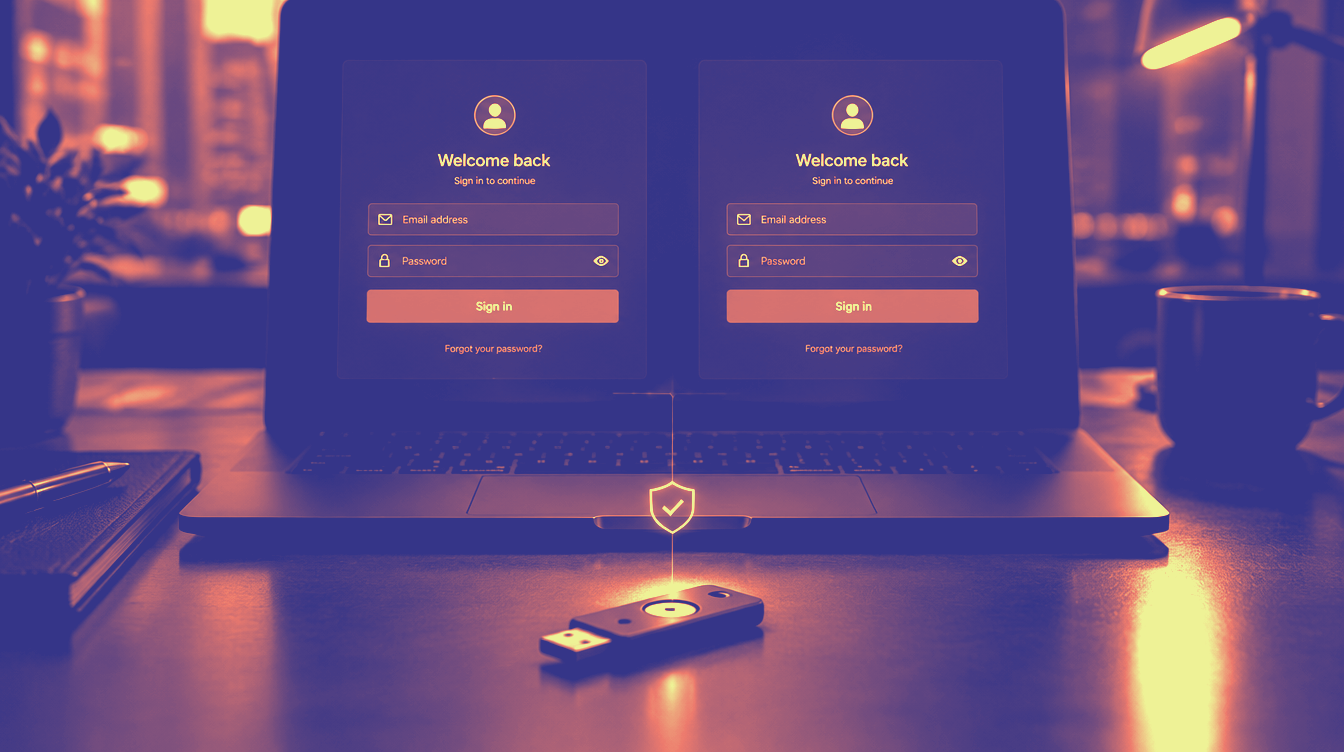
Dedicated biometric hardware changes that equation. Token binds authentication to a physical device, a live fingerprint and cryptographic credentials associated with the legitimate service. There is no MFA code to give away and no push notification to approve. The credential is held in dedicated hardware rather than synchronized across consumer devices.
But the Binance incident raises an even bigger issue: Why should access to a DevOps environment ever be enough to authorize a transaction worth millions or billions of dollars?
A transaction of significant value should hit a completely separate biometric gate. Before the transaction can be signed or released, an authorized human should have to physically authenticate using dedicated biometric hardware. Fingerprint. Hardware. Physical presence. Approval.
At that point it almost doesn’t matter how the attacker got inside. They could steal the password. Compromise MFA. Take over a session. Compromise the engineer’s laptop. Even potentially gain control of internal software. When the system reaches the point where it attempts a protected transaction, it stops.
No authorized fingerprint on the dedicated hardware device. No transaction.
We do not yet know whether compromised MFA or a consumer grade passkey (such as Windows Hello using a phone as the Authenticator) played any role in the Binance attack. It would be irresponsible to claim that they did. But we do know something much more important.
An architecture that requires hardware bound biometric identity both at privileged access and again at the point of a high consequence transaction creates two extraordinarily difficult gates for a remote attacker to cross.
One has to ask why wasn't this the internal standard knowing how much is at stake?
Token devices are inexpensive compared to any loss key alone a multibillion dollar loss.
The lesson from Binance may ultimately be much larger than crypto.
For critical systems, authentication should not merely ask, “Does this user have the right credentials?”
It should ask, “Is the authorized human physically here, and are they explicitly approving this action right now?”
That is the difference between trusting credentials and proving identity.