Salesforce Phishing Resistant Access: Why Token Became the Leading Choice
Salesforce has become one of the most valuable data platforms in the enterprise. It holds customer records, donor data, sales pipelines, financial history, case notes, reports, workflows, integrations, and privileged administrative controls. For many organizations, Salesforce is not just a CRM. Salesforce is the front door to the business. That is why Salesforce security is changing so quickly.
Salesforce has made the direction clear. AI driven attackers are using credential theft, phishing, vishing, account takeover, and automated data exfiltration to target Salesforce users. Admins and privileged Salesforce users are especially attractive targets because one compromised Salesforce admin account can expose enormous amounts of sensitive data. Salesforce is responding by enforcing stronger identity controls, including MFA for all Salesforce users and phishing resistant MFA for Salesforce admins and privileged Salesforce users.
This is the right move. But it also forces every Salesforce customer, Salesforce partner, and Salesforce nonprofit implementation team to ask a very practical question. What is the best way to meet the new Salesforce phishing resistant access requirement without making Salesforce harder to use? The answer is Token.
Biometric-Assured Identity for Salesforce
Token delivers phishing resistant Salesforce access with biometric assured identity today. It gives organizations the protection Salesforce is pushing the market toward, but in a form factor that is easy to deploy, easy to use, and far stronger than legacy MFA, authenticator apps, shared passwords, text codes, push approvals, and software only passkeys.
Salesforce is clearly pointing customers away from phishable login methods. Traditional MFA was an important step years ago, but the threat landscape has moved. Attackers now routinely bypass passwords, one time codes, push based MFA, and authenticator apps. Phishing kits can proxy login sessions. Help desk attacks can reset credentials. AI can generate perfect social engineering at scale. A Salesforce user can believe they are logging into Salesforce while an attacker is capturing the session in real time.
That is exactly why Salesforce is moving toward phishing resistant MFA for privileged Salesforce users. The key idea is simple: the authentication must be cryptographically bound to the legitimate Salesforce login experience so it cannot be replayed on a fake site. FIDO2 and WebAuthn are built for that. But not all FIDO2 and WebAuthn deployments are equal.
A shared passkey stored in a cloud password manager may satisfy a technical requirement, but it does not solve the deeper identity problem. It may prove that someone has access to the vault. It may prove that someone has access to a synced credential. It may prove that the credential can complete a FIDO2/WebAuthn challenge. What it does not prove, with high assurance, is that the actual authorized human is physically present. That is the difference with Token and why smart enterprises have chosen biometric assured identity.
That is what Token delivers: hardware-bound, biometrically verified, phishing-resistant authentication for Salesforce.
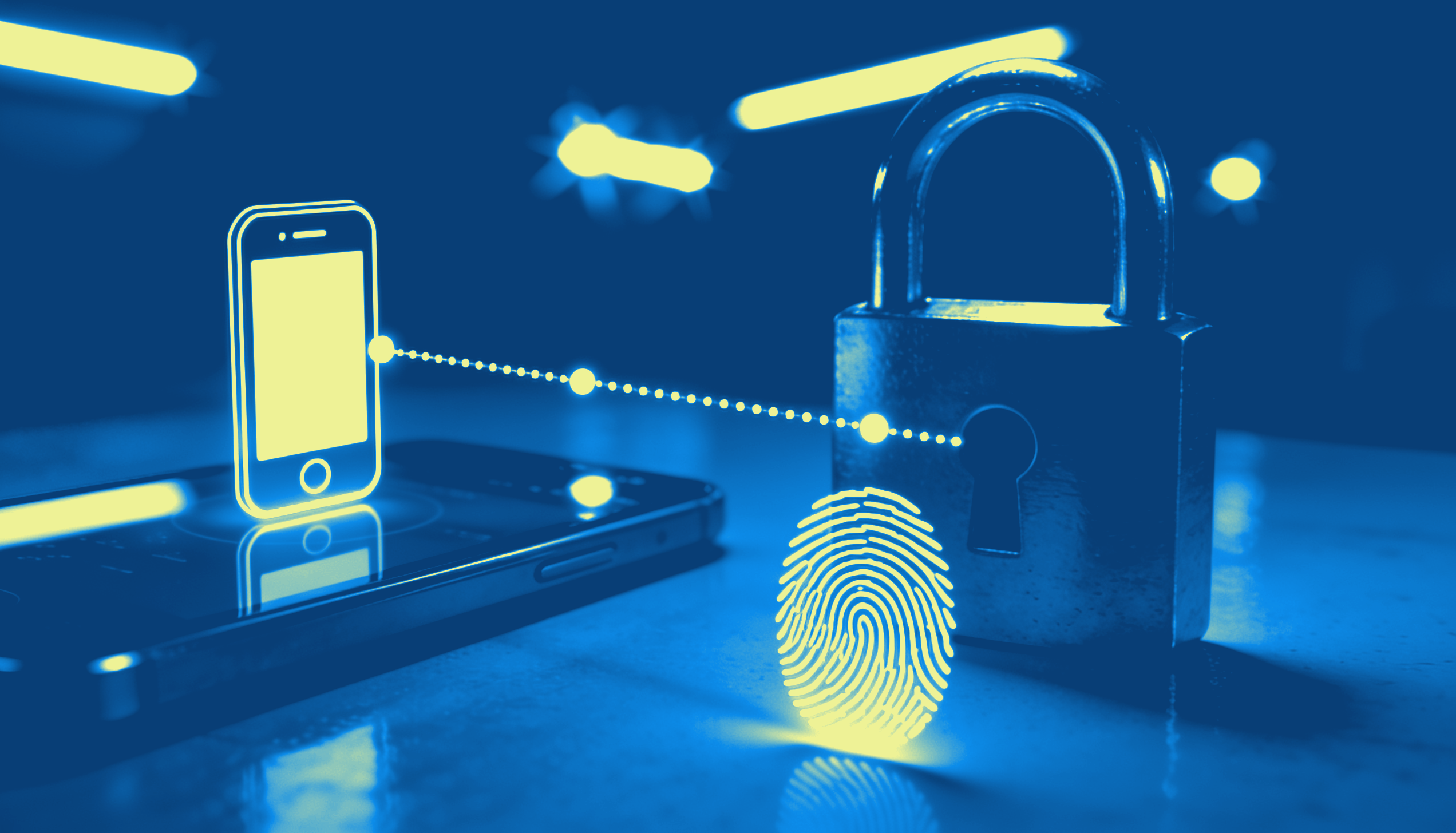
Token ties Salesforce access to the physical human through biometrics. A Token device requires the enrolled fingerprint of the authorized user before the Salesforce login can complete. The biometric template stays inside the Token device. It is not collected by the employer. It is not stored in Salesforce. It is not stored in a password manager. It is not sitting in a cloud account waiting to be synced, copied, phished, reset, or socially engineered. The user’s fingerprint unlocks the private key operation locally on the device, and the Salesforce authentication is completed through phishing resistant FIDO2/WebAuthn.
That is the gold standard path for Salesforce access because it combines the two things that matter most. First, it provides phishing resistant cryptographic authentication for Salesforce. Second, it provides biometric assured identity so the organization knows the right person is present at the moment of access.
Why It Matters for Salesforce Admins
For Salesforce admins, that matters enormously. A Salesforce admin can modify data, export reports, change permissions, create users, authorize integrations, and alter the security posture of the Salesforce org. If that account is shared, weakly controlled, or protected only by a password manager and a software credential, the organization still has a human accountability gap. Who actually used the Salesforce admin account? Who approved the export? Who changed the configuration? Who accessed donor records, patient records, student records, customer records, or financial records? Token closes that gap.
A Cleaner Answer for Salesforce Partners & Nonprofits
For Salesforce partners, this is especially important. Many small companies and nonprofits depend on outside Salesforce partners because they do not have large internal IT teams. Historically, some support teams used shared Salesforce admin logins because it was simple and practical. But shared Salesforce access is exactly where identity assurance becomes critical. If multiple people can use the same Salesforce credential, then the security model must prove which human is actually present. A password manager cannot do that by itself. A TOTP code cannot do that. A push approval cannot do that. A synced software passkey may prove access to a credential, but it does not deliver the same human bound assurance as a biometric Token device.
Token gives Salesforce partners and Salesforce customers a cleaner answer. Keep Salesforce access simple, but make the login bound to the person. Require the physical Token device. Require the enrolled fingerprint. Use phishing resistant FIDO2/WebAuthn. Remove the ambiguity. Remove the phishable factors. Remove the shared secret problem. Remove the “who actually logged in” problem.
Practical Deployment Across the Salesforce Environment
This is why Token is becoming the preferred method for Salesforce phishing resistant access. It aligns with the direction Salesforce is already moving. It supports the technical requirement for phishing resistant authentication. It raises the bar beyond basic passkeys by adding biometric assured identity. It works across devices and operating systems. It is wireless. It is fast. It is practical for Salesforce admins, Salesforce partners, Salesforce consultants, Salesforce nonprofits, and Salesforce enterprises.
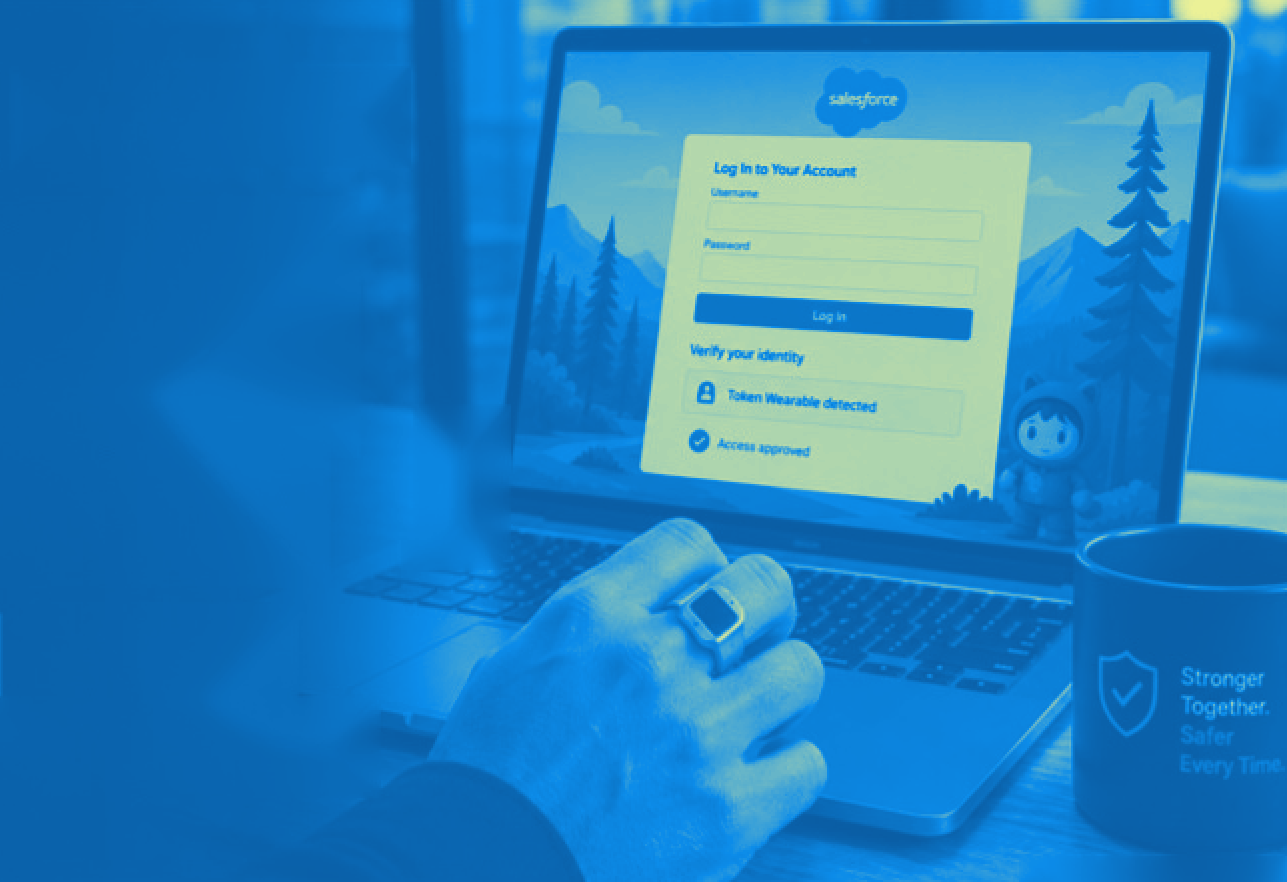
Ease of use matters because security that users hate will eventually be bypassed. Token is designed for everyday Salesforce login. Users do not need to pull out a phone, read a code, approve a push prompt, or wonder whether a login page is real. The user presents the Token device, verifies with a fingerprint, and completes a secure Salesforce login in seconds. Token form factors are built for the real world, including wireless devices that work across laptops, desktops, phones, tablets, and operating systems. That matters for Salesforce because Salesforce is accessed everywhere.
The Scope of Salesforce’s Direction
It also matters for the future of Salesforce security. Salesforce is starting with privileged users, but the market direction is obvious. The same AI driven phishing and social engineering attacks that target Salesforce admins today will continue moving across the entire Salesforce user population. Sales users, service users, finance users, nonprofit staff, operations teams, and executives all touch sensitive Salesforce data. If the Salesforce admin account needs phishing resistant access, why would the rest of the Salesforce organization stay on weaker methods?
That is the conversation Salesforce customers should be having now. Do not wait until enforcement expands. Do not wait until a Salesforce account is compromised. Do not wait until a shared admin credential becomes the root cause of a breach. Do not wait until an attacker uses a phished Salesforce session to export donor records, customer data, pipeline data, or regulated information.
Token for Salesforce
Token is not just another MFA factor. It is a better identity model for Salesforce. It replaces trust in passwords, phones, codes, and shared software credentials with trust in a hardware bound, biometric verified, phishing resistant login. It gives Salesforce customers what Salesforce is asking the ecosystem to adopt: stronger access, stronger assurance, and stronger protection against AI driven threats.
Salesforce has made the future clear. Phishable MFA is no longer enough. Privileged Salesforce users need phishing resistant access. Over time, every serious Salesforce organization should expect the same standard to apply more broadly.
The organizations moving first are not just checking a compliance box. They are setting the Salesforce security standard for everyone else.
For Salesforce admins, Salesforce partners, Salesforce nonprofits, and Salesforce enterprises, Token is the straightforward choice. It is available today. It is biometric. It is phishing resistant. It is easy to use. It works across the modern Salesforce environment. And most importantly, it proves that the right human is present before Salesforce opens the door.
That is what Salesforce security requires now.