Apollo Wasn’t Hacked. They Were Authenticated.

Another major enterprise fell victim to identity-based social engineering. Here’s exactly how it happened, why legacy authentication failed, and why it’s time to rethink the front door.
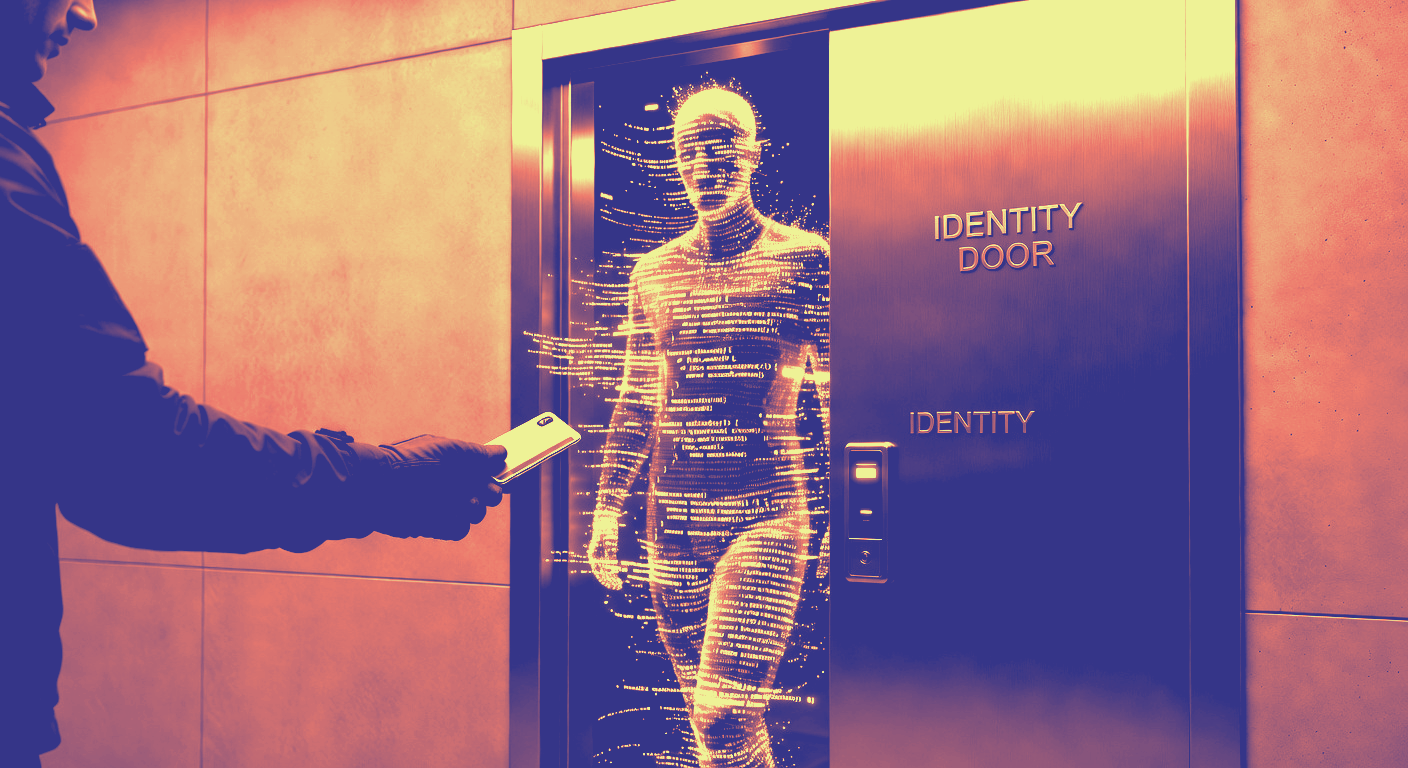
When Apollo Global Management recently disclosed a data breach, many headlines framed it as another sophisticated cyberattack. But if you look carefully at the publicly reported details, the story is actually much simpler. Attackers didn’t exploit an unknown software vulnerability. They didn’t bypass next generation firewalls. They didn’t crack encryption or deploy advanced malware. Instead, they convinced employees they were legitimate IT personnel, directed them to a convincing login page, and had those employees authenticate the attackers into Apollo’s own systems. The attackers didn’t break in. They logged in.
That distinction is important because it reflects a profound shift in cybersecurity. The enterprise perimeter is no longer defined by networks or endpoints. It is defined by identity. Increasingly, the front door to every organization is authentication itself.
Unfortunately, Apollo is far from alone. Similar identity-based attacks have recently impacted organizations including Aflac, Qantas, Allianz, Hawaiian Airlines, Ingram Micro, and many others. Different industries. Different infrastructures. Different security stacks. The same front door.
How the Attack Worked
Based on public reporting, the attack followed a sequence that has become alarmingly common.
First, the attackers contacted employees while impersonating Apollo’s internal IT organization. Using urgency and credibility, they convinced employees they needed to resolve an account issue. The employees were directed to what appeared to be a legitimate corporate login page. In reality, it was controlled by the attackers. Employees entered their usernames and passwords exactly as they normally would. When Apollo’s identity provider requested multi factor authentication, the employees completed that step as well, believing they were signing into legitimate corporate resources.
The attackers immediately relayed that authentication to Apollo’s actual infrastructure and successfully established authenticated sessions. At that point, they were no longer outsiders attempting to breach the network. To virtually every downstream security product, they appeared to be legitimate employees. no software exploit was necessary. No ransomware had to be deployed initially. No firewall failed. Authentication itself became the attack vector.
Why Legacy MFA Keeps Failing
Many organizations still believe that enabling multi factor authentication dramatically reduces the risk of phishing attacks. That was once largely true. Today, it depends entirely on what kind of MFA you’re using.
SMS codes, authenticator applications, push approvals, and one time passwords all share a common weakness. They ultimately rely on the user making the correct decision. If an employee can be convinced that a login request is legitimate, the authentication system often has no way to distinguish between the employee authenticating themselves and the employee unknowingly authenticating an attacker.
Modern phishing toolkits exploit this weakness perfectly. They proxy authentication sessions in real time, presenting victims with login pages that are nearly indistinguishable from legitimate corporate portals. The employee believes they are completing their own login, while the attacker is simply relaying every step to the real authentication service.
The authentication succeeds because the employee successfully completed MFA. The system never recognizes that it authenticated the wrong person.
Even passkeys, while representing an important improvement over passwords and legacy MFA, are not a complete answer by themselves. FIDO2 is an outstanding authentication standard, and Token itself is built upon it. But many passkey implementations rely on cloud synchronized credentials, consumer devices, operating system security, account recovery mechanisms, and software controlled biometrics. Each of those layers can introduce additional opportunities for attackers.
In our own research, we have identified 39 distinct methods by which passkey implementations may be compromised, bypassed, recovered, transferred, or abused depending on how they are deployed. Cloud account compromise, stolen devices, malware, weak recovery procedures, social engineering, and user coercion all remain possible attack paths in many environments.
The important distinction is this: FIDO2 is extremely strong. Consumer implementations surrounding passkeys often are not.
Why Token Would Have Stopped This Attack
This is exactly the type of attack Token was designed to prevent. Rather than relying on passwords combined with legacy MFA, Token provides dedicated hardware based biometric FIDO2 authentication. More importantly, every authentication must satisfy multiple independent security requirements before access is granted.
-
Token cryptographically verifies that the authentication request originates from the legitimate domain where the credential was originally registered. A spoofed website cannot simply collect authentication information and relay it to another destination because there is no reusable credential to steal.
-
Every authentication requires a live fingerprint directly on the Token device. Knowing an employee’s username and password is irrelevant. Convincing a help desk to reset credentials is irrelevant. Even physically stealing a Token device is insufficient because it cannot authenticate without the authorized fingerprint.
-
The private cryptographic key never leaves Token’s secure hardware. There are no six digit codes to intercept, no push notifications to approve, and no shared secrets that attackers can relay.
-
Token requires physical proximity between the authenticator and the computer or mobile device requesting access. An attacker operating remotely cannot satisfy this requirement.
Authentication succeeds only when every one of these conditions is simultaneously true.
-
The request originates from the legitimate domain.
-
The authorized Token device is present.
-
The authorized user provides their fingerprint.
-
The cryptographic challenge is validated.
-
If any of those conditions fail, authentication simply does not occur.
-
The phishing attack ends before it begins.
Identity Is the New Perimeter
For years, organizations have invested enormous resources protecting networks after attackers gain access. Endpoint detection, behavioral analytics, SIEM platforms, network segmentation, and threat hunting all remain important components of a modern security program.
However, every one of those technologies assumes someone has already crossed the authentication boundary. Once attackers successfully authenticate as legitimate employees, distinguishing malicious activity from legitimate activity becomes dramatically more difficult. Security teams are effectively chasing attackers through their own networks while those attackers wear trusted digital identities.
There is a better approach: Prevent attackers from successfully authenticating in the first place. That single architectural change removes the need to detect an enormous class of attacks because those attacks never become authenticated sessions.
The Question Every Board Should Be Asking
Apollo undoubtedly invested heavily in cybersecurity. Most Fortune 500 companies do. Which raises an uncomfortable question: If phishing resistant, hardware based biometric authentication is commercially available today, why are organizations still relying on authentication methods that attackers bypass every day?
Perhaps an even more important question follows: Why wasn’t Apollo using Token?
The same question could reasonably be asked after Aflac. After Qantas. After Allianz. After Hawaiian Airlines. After Ingram Micro. And unless organizations fundamentally change how they authenticate users, it will likely be asked again after the next major breach.
It’s Time to Lock the Front Door
For decades, cybersecurity has focused on building taller walls and deploying better alarms once attackers are inside. Today’s attackers have largely stopped climbing the walls. They simply convince someone to open the door.
At Token, we’ve taken a different approach. Rather than assuming employees can always recognize sophisticated phishing attempts or social engineering attacks, we’ve built authentication that removes those decisions from the employee altogether.
-
Dedicated hardware.
-
Fingerprint based identity.
-
FIDO2 cryptography.
-
Secure hardware protected private keys.
-
Origin verification.
-
Physical proximity.
Together, they create an authentication architecture that dramatically changes the economics of identity attacks. Stolen passwords become worthless. Real time phishing breaks down. MFA relay attacks fail. Help desk impersonation no longer provides a path into the enterprise.
Every organization eventually reaches the same realization. The most valuable security investment isn’t the one that catches attackers after they’ve entered. It’s the one that never lets them through the front door. And that’s exactly what Token was built to do.